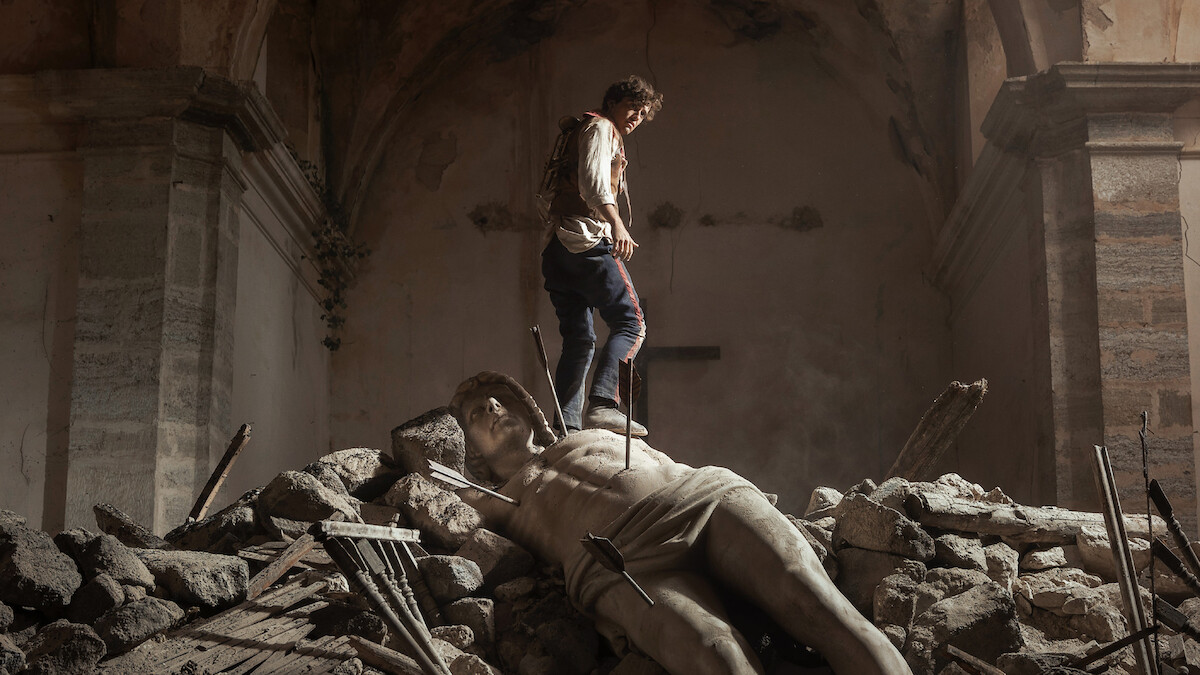
Álvaro de la Fuente Calvo as Sebastián
The two directors are affectionately known as ‘Los Javis’. With a monumental and majestic sweep, they have created this tale of tales set in three historical periods. It was inspired by an unfinished, semi-autobiographical play also called ‘La Bola Negra’ by Federico García Lorca and a book called “La Piedra Oscura” by Alberto Conejero with whom they worked to complete the screenplay. It is a masterly development of how they imagined the unfinished play might have ended.
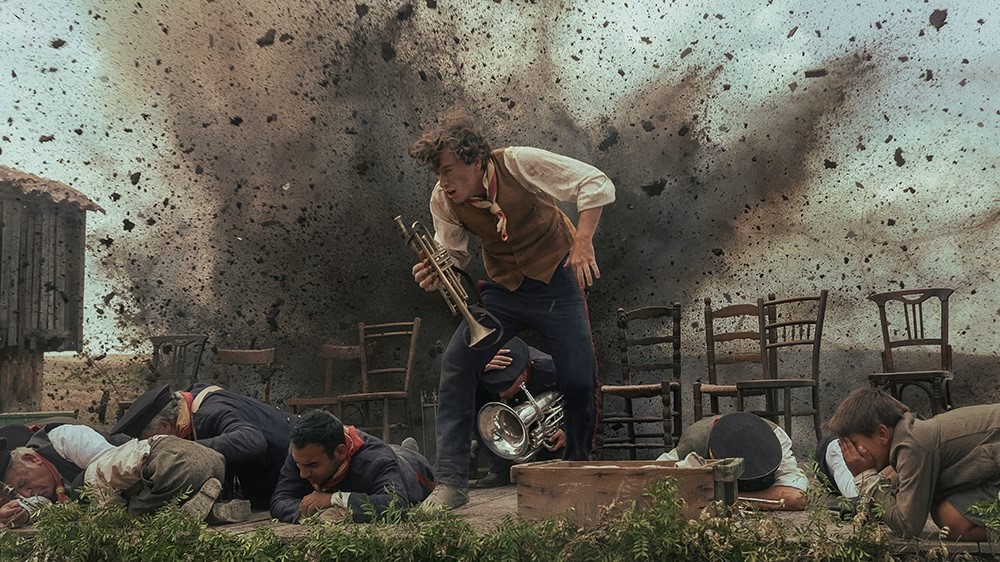
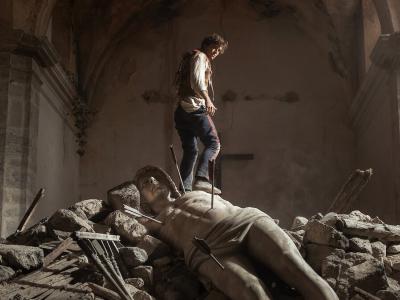
Álvaro de la Fuente as Sebastián, the trumpet player
This 2026 film, ‘La Bola Negra’ which premiered at the 70TH Cannes Film Festival has ended up as a homage to the struggles of so many over so many decades. It is enriched by the poetry of Lorca that shines through in quotes, with much of the passion, anguish and hopes with which he filled the pages of his plays. It is about a prohibited love that sweeps down the generations, becoming a tribute to that queer history and those lives that were affected and forced into silence or worse.
Sadly, all that remained of Federico García Lorca’s play were a few pages and a basic outline he sent, before he died, to a fellow playwright Cipriano Rivas Cherif. It is with this heartbreaking theme that the film opens in 1932, as the wealthy young Carlos (Milos Quifes) applies for membership of the exclusive Casino Club in Granada. The voting there is cast in the form of white balls for yes and black for no. Carlos finds himself rejected due to rumours about his sexuality. His frantic father insists he should re–apply and publicly denounce the rumours, while his mother offers him her savings and begs him to leave and go to Madrid. Mothers always know.
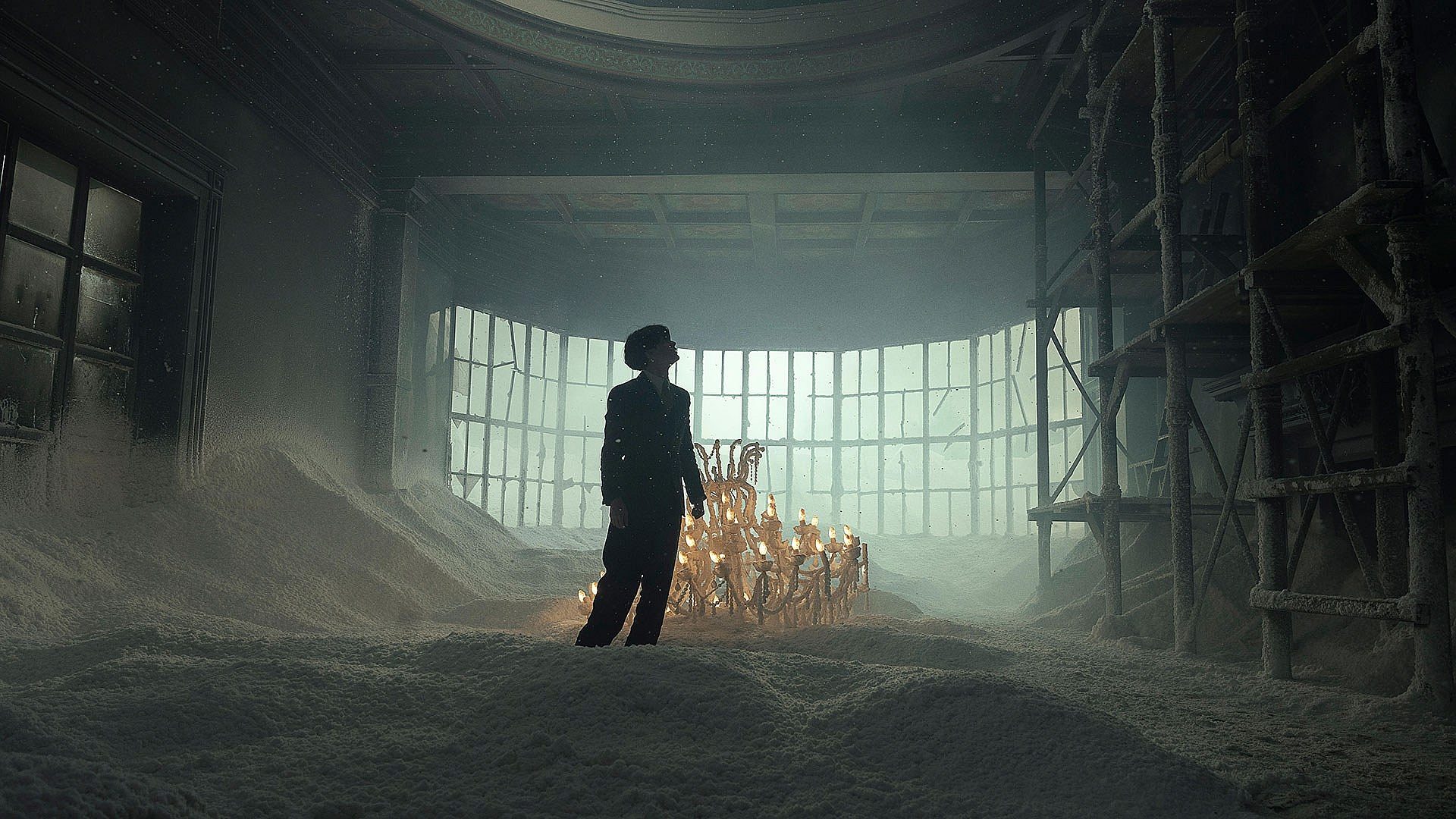
Milo Quife as Carlos
We are then thrown into the ironical situation of a small town in 1939 that, while preparing to welcome Mussolini’s fascist troops, gets bombed instead by the passing Italian aircraft, echoing the horrors of Guernica. But was it really a mistake? One of the few survivors is Sebastian (a superb Álvaro de la Fuente Calvo in his acting debut). This young and naïve trumpet player of the village band is then chaotically recruited into the pro- Franco Nationalist army.
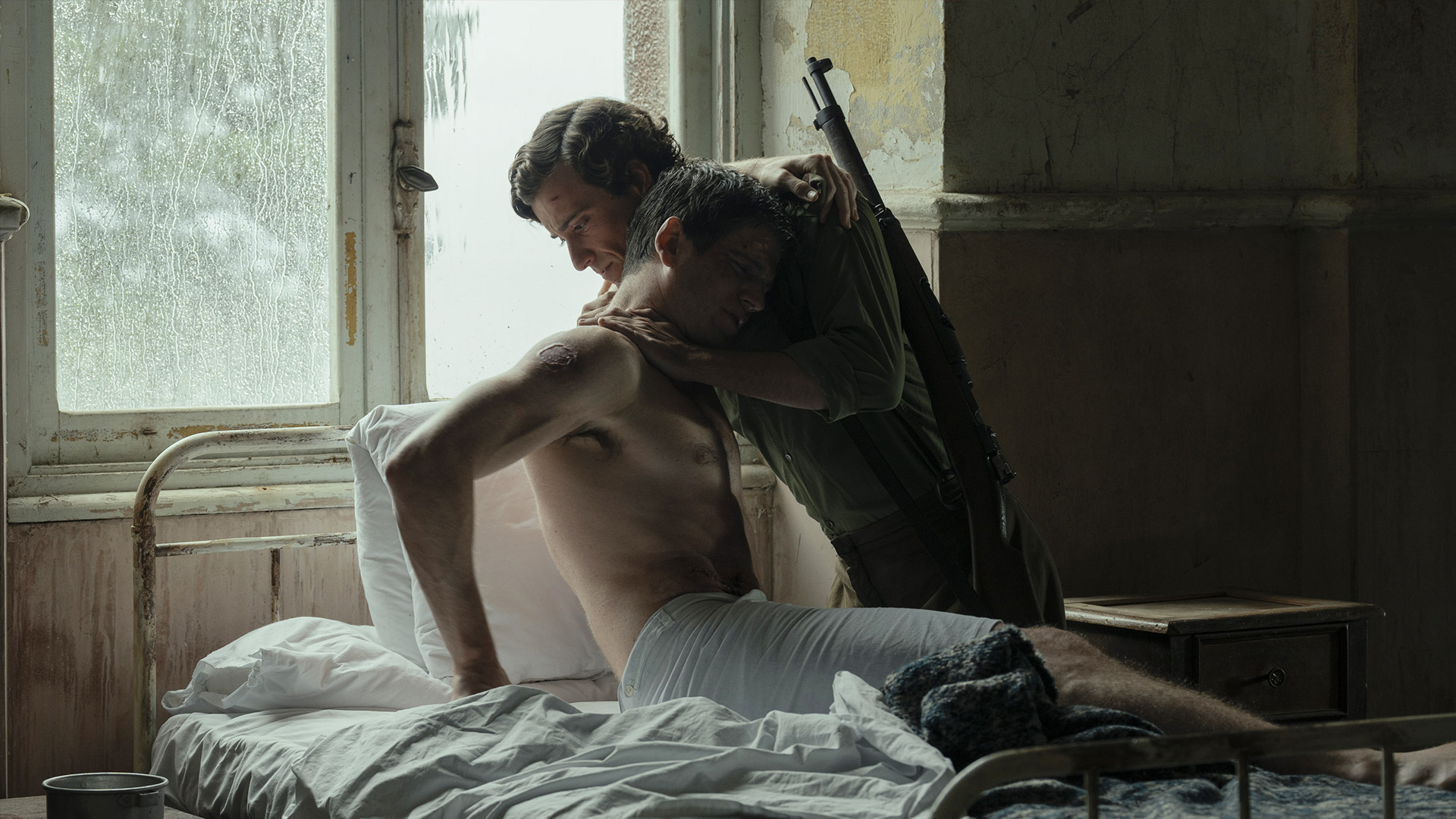
Miguel Bernardeau as Rafael, and Álvaro de la Fuente as Sebastián
Sebastian’s life is changed when he meets and falls for the astonishingly beautiful Rafael, (Miguel Bernardeau) a badly wounded Republican prisoner he has been tasked to guard. He is further confused by Rafael entrusting him to find some valuable papers in a Madrid apartment, a request he promises to fulfil after the war. The soldiers let off steam at a club where Nené Romero is the cabaret artist. This is a short and wonderful little cameo by Penélope Cruz, surviving against all odds among misogynistic men.
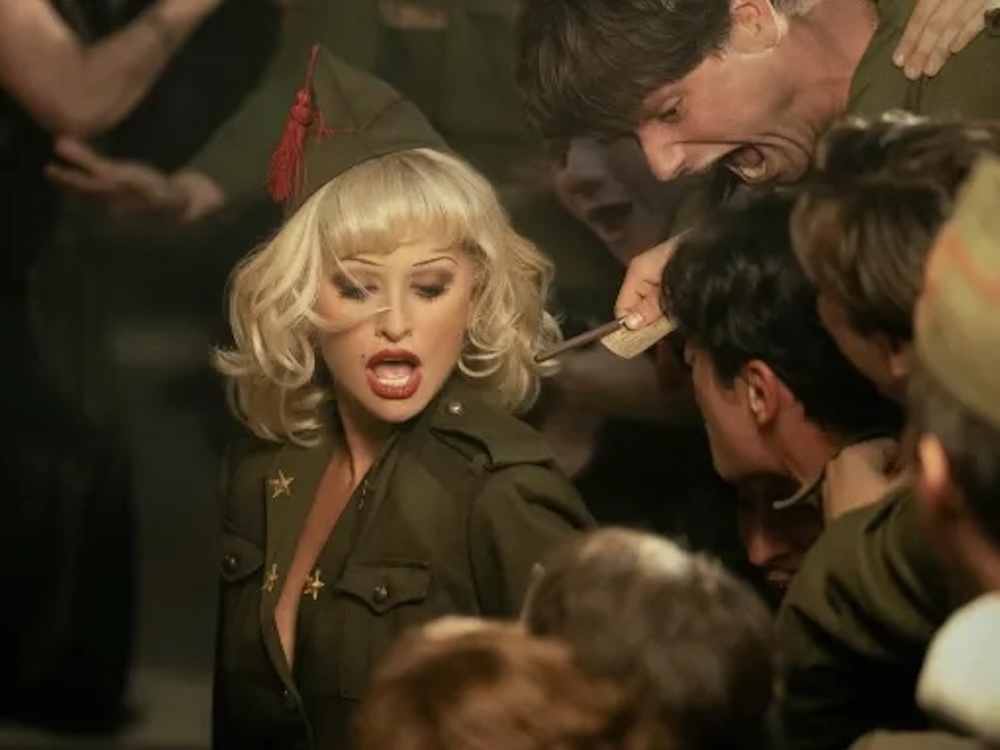
Penélope Cruz as Nené
Finally, we jump to 2017, where failed playwright Alberto López Azcuna (Carlos González) lives with his partner, Juan Pablo (Julio Torres) in Madrid, while he researches queer references in 1920s popular music and attends lectures by Lorca expert Isabella Duranc (Glenn Close).
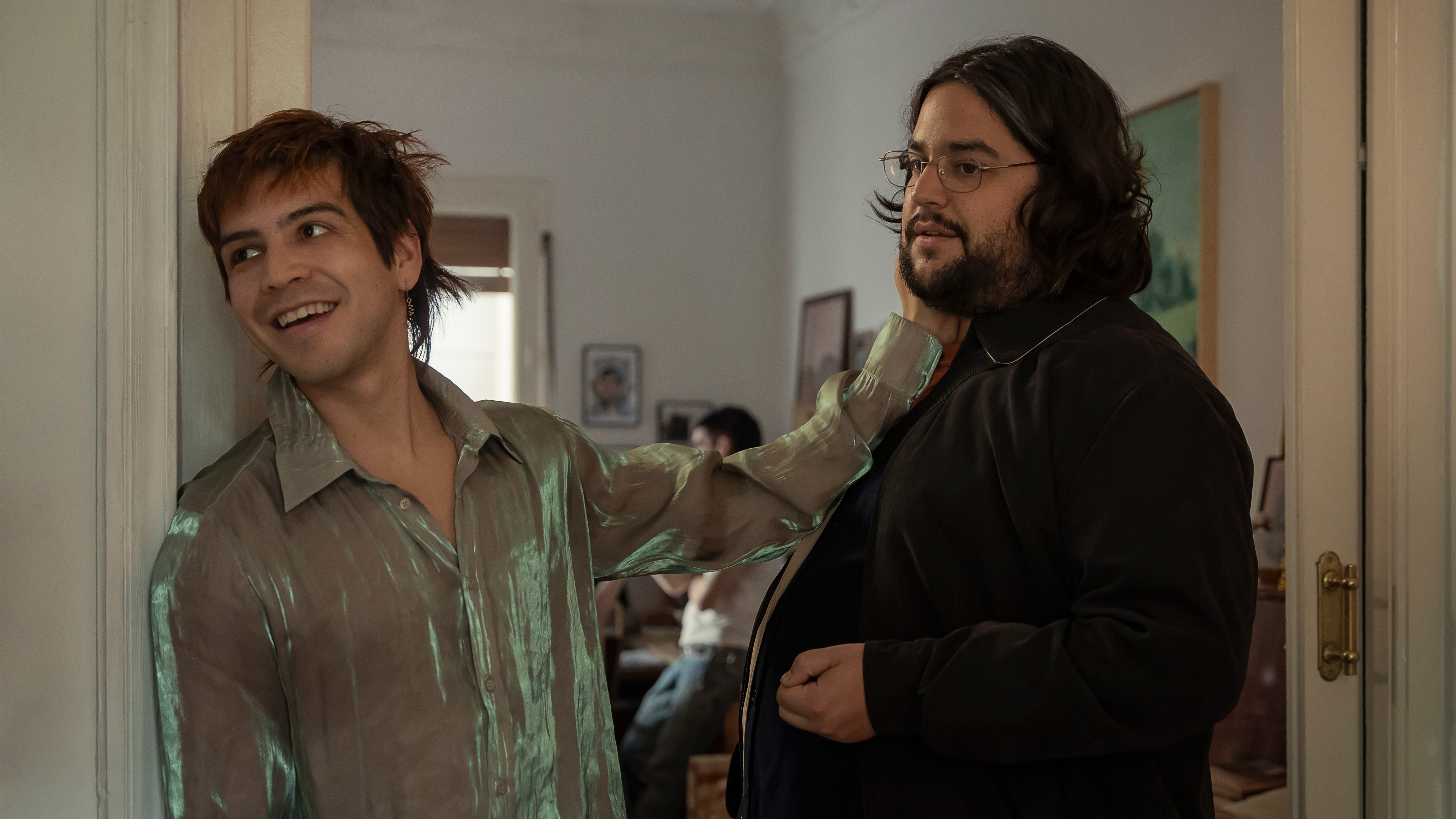
Carlos González as Alberto & Julio Torres as Juan Pablo
The links between these different periods finally start to unfold when Alberto unexpectedly receives a strange bequest from his grandfather (who turns out to have been Sebastian). His mother Teresa (the magnetic Lola Dueñas), a bad- tempered, strong- willed woman who is determined to remain permanently depressed, argues forcefully for Alberto never to pick up the grandfather’s inheritance, which he chooses to do regardless.
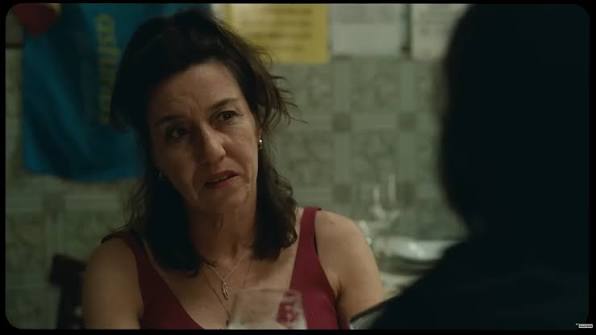
Lola Dueñas as Teresa
‘La Bola Negra’ is an example of superb, original and immensely powerful filmmaking, as majestic as the snow-clad Sierra Nevada mountains where Carlos begs for a way back to the land of the living. It is hard to describe the impact this film has on the emotions and the senses. One minute, it moves you to the core, then shocks you with brutality, while embracing you with its immensely beautiful cinematography and soundscape. An audacious masterpiece, a triptych about death, inheritance, memory, silence and ultimately love.
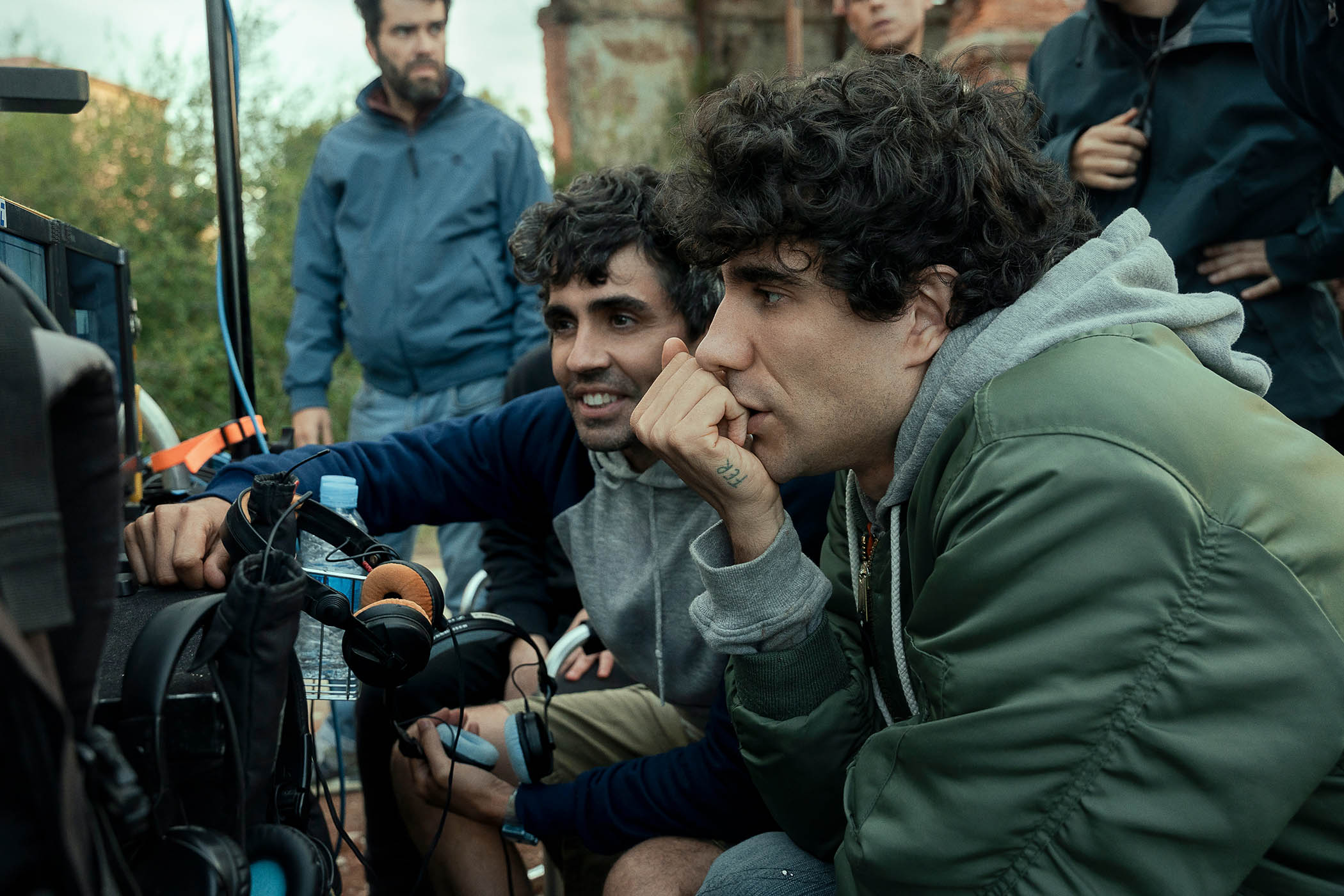
Los Javis- Javier Ambrossi and Javier Calvo
‘LA BOLA NEGRA’ (2026) by Javier Ambrossi and Javier Calvo
On general release in the UK from November 6th
WINNER - Best Director, Cannes Film Festival
WINNER - People’s Choice Award, Toronto International Film Festival
WINNER - Audience Award, San Sebastian Film Festival
Spain’s Official Entry for ‘Best International Film’ at the 99th Academy Awards
CREDITS: -
Screenplay: Los Javi with Alberto Conejero, writer of the book ‘La Piedra Oscura ‘and Federico García Lorca’s ‘La Bola Negra’ and other texts.
Producers: Javier Ambrossi and Javier Calvo, Jorge Pezzi / associate producers include :Pedro Almodóvar and Agustin Almódovar / Executive Producer: Paula Cipriota / Composer: Raúl Refree / Cinematographer: Gris Jordana / Editor: Alberto Gutiérrez / Casting: Eva Leira and Yolanda Serrano / Production Designer: Roger Bellés / Art Director: Oriol Guardiola / Set Decorator: Judit Ferrer /Sound Designer: Alejandro López / Colourist: Jorge Ortiíz Yus / Movistar Plus. Suma Content, Le Pacte and Los Esquidores, El Deseo / Locations: Castil de Carrias, Burgos Spain, Sierra Nevada Granada Spain/ Monasatiraki Market Athens, Greece/ Cantabria, León, Madrid, Playa de la Arnía, Cantabria and more.
CAST: Sebastian: Álvaro de la Fuente Calvo (also known as Guitarricadelafuente) / Rafael Rodríguez Rapún: Miguel Bernardeau / Carlos: Milo Quifes / Alberto López Azcuna: Carlos González / Juan Pablo: Julio Torres / Teresa: Lola Dueñas / Nené Romero: Penélope Cruz / Padre de Carlos,Vicente: Antonio de la Torre / Madre: María Morales / Isabelle Duranc, Lorca expert: Glenn Close / Riccardo: Lorenzo Zurzolo