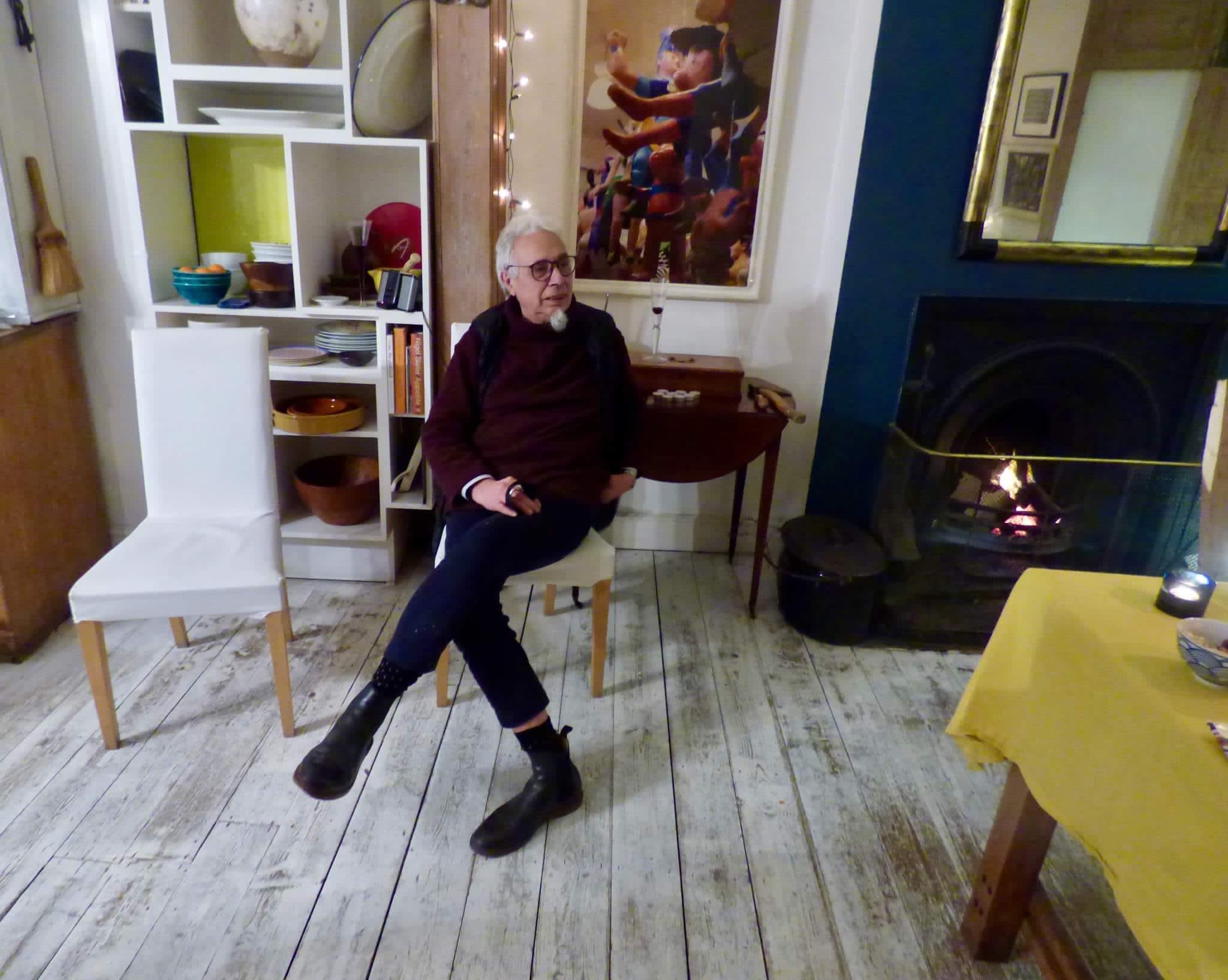
Mario Flecha
“LOS LOCOS SIEMPRE VIVEN EQUIVOCADOS” (Tauromarquia) (The mad are always mistaken)
Born in Buenos Aires in 1949 into a Paraguayan family, Mario Flecha now divides his time between London and Jafre in Catalunya. For 15 years he published Untitled Magazine of Contemporary Art, Bastón Blanco, and a number of books of short stories, including Los Vendedores de Humo (The Smoke Sellers), Anastasia’s Toes, El Trapecista (The Trapeze Artist), Professor Monday Zofana, and now his last one Tiquismiquis with illustrations by Olivia Flecha.
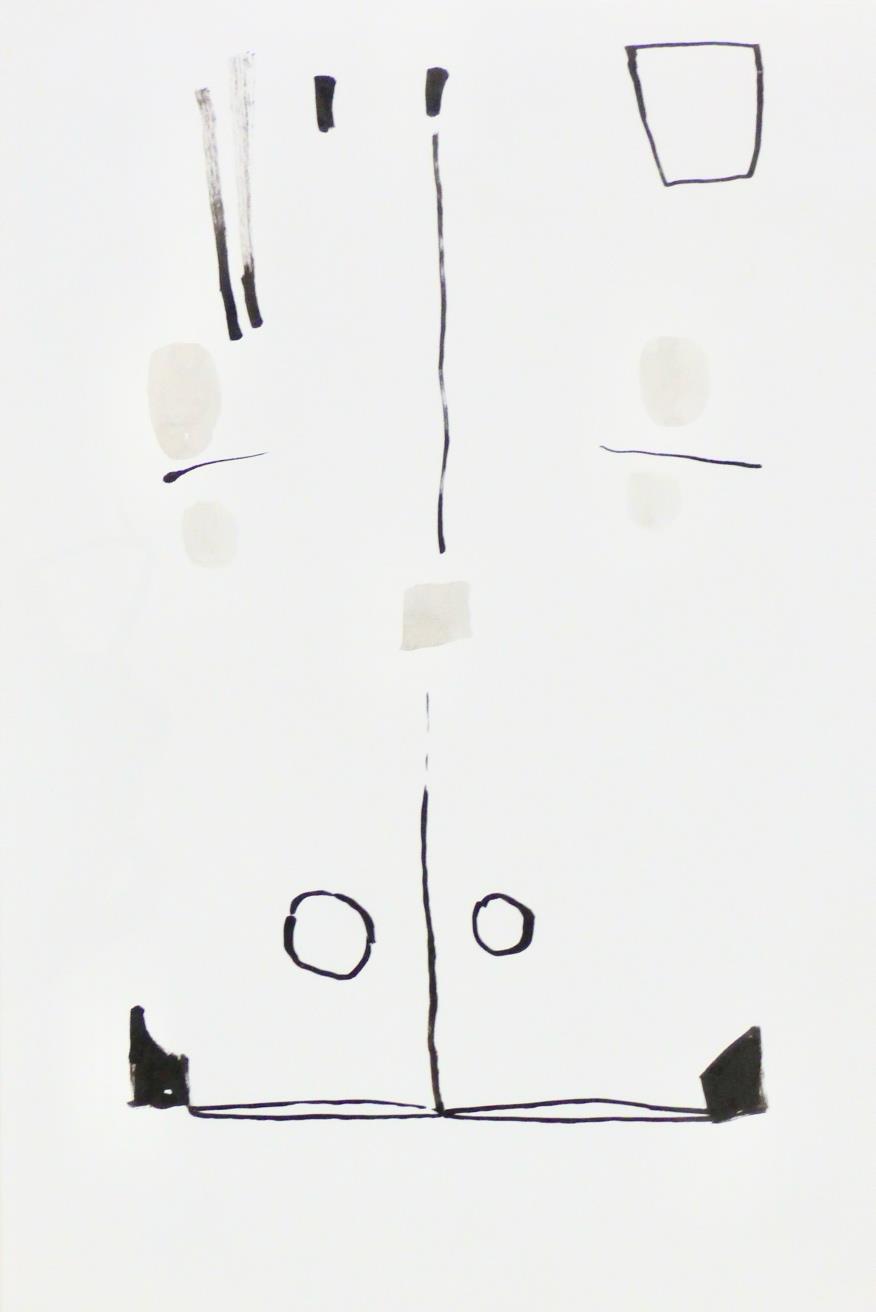
Illustration by Olivia Flecha for Tiquimiquis
Mario Flecha also collaborated with Gregorio Kohon and Viqui Rosenberg on Truco Gallo and 6to Tango (a book of graphic short stories with Oscar Grillo & others) and is co-editor of the online magazine PERRO NEGRO. His love of art led him to co- found and run a biennale of contemporary art based in Jafre, Catalunya, for many years. The Covid years made a dent in their continuation but he then co-founded the Museum of Words which has no actual base, it is a wall in the picturesque village of Jafre where they hold events and readings, even picnics. In a sense, these events are like installations in their own right based against that wall that is all that remains of the area where, traditionally, the village women would come to wash their clothes.
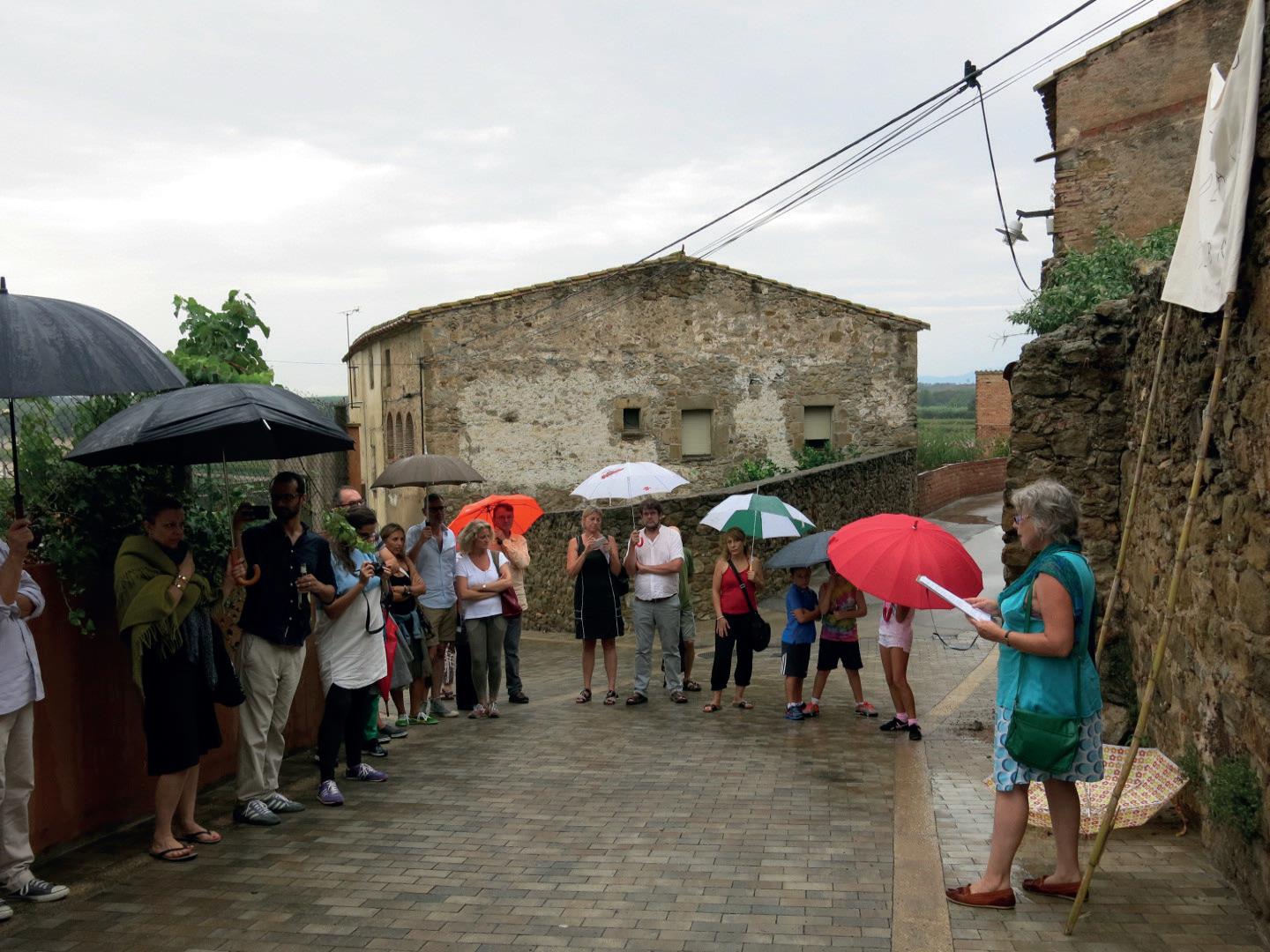
Amalia Pica- Retrospective performance at the Museum of Words Jafre- 2015
Brought up in Barracas, a neighbourhood in the south of Buenos Aires between the Rio Matanza (the Riachuelo) and La Boca, Flecha’s insists his childhood was basically spent playing in the streets: -
“My childhood was like that of all my friends. We lived in the street, playing football, fighting for hours went to school and we made huge bonfires for San Juan- I learned [to read] very young because my mother used to teach me, because, when she was young, she had asthma so she did a lot of reading, My father worked in the merchant navy and he travelled constantly to Brazil so we were alone very often so my mother read everything she could get her hands on and I did the same,. I must have been 4 or 5 years old and I never understood the stories I read at that time. Also, there was no television, it was only broadcast for two hours a day, and we did not even own one. My mother and I were always waiting for my father to come back because he always returned full of stories. Stories that never had any end, they started in the beginning but never ended in anything, we just laughed about it. His narrative was totally non- sensical and I enjoyed listening to him and I enjoyed her laughing as well. A beautiful memory of them both... “
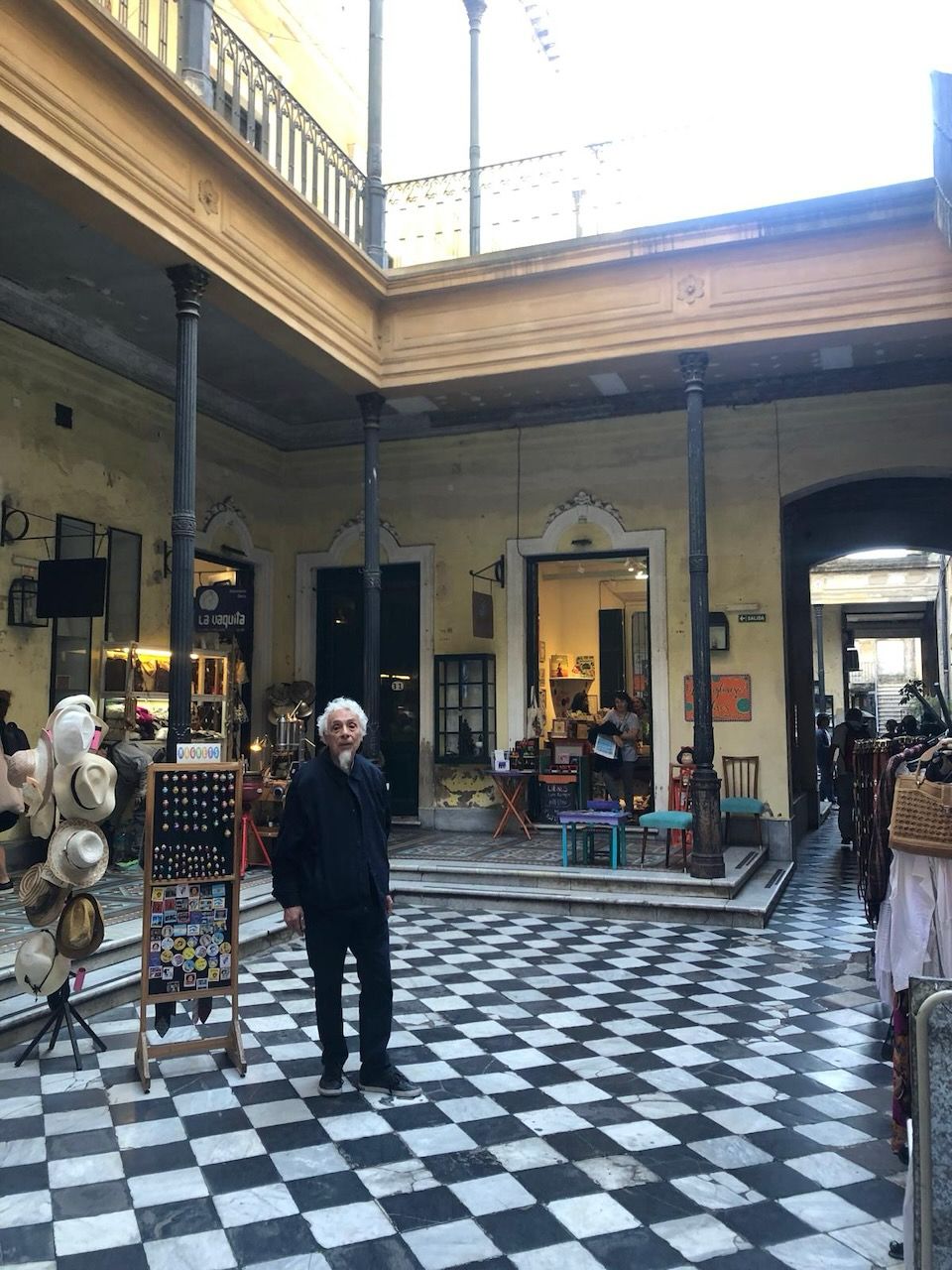
Mario Flecha in San Telmo
‘PIBES’ (Kids) is the first story the book, where two close friends Jules and Jules decide to start collecting things, simply because they can. Jules collects finger nails, while Jules collects old bottles. The problems arise when they start to wonder what they can do with them to make all their efforts worthwhile. There is an element of magic in the idea of these eccentric collections that inspire a number of their wild dreams.
“I was always fascinated by young people who say one thing and then do something else, then they forget about what they were talking about, they simply are what they are, at some point they say: ‘I don’t like this [ any more] and they throw it away without a thought.”
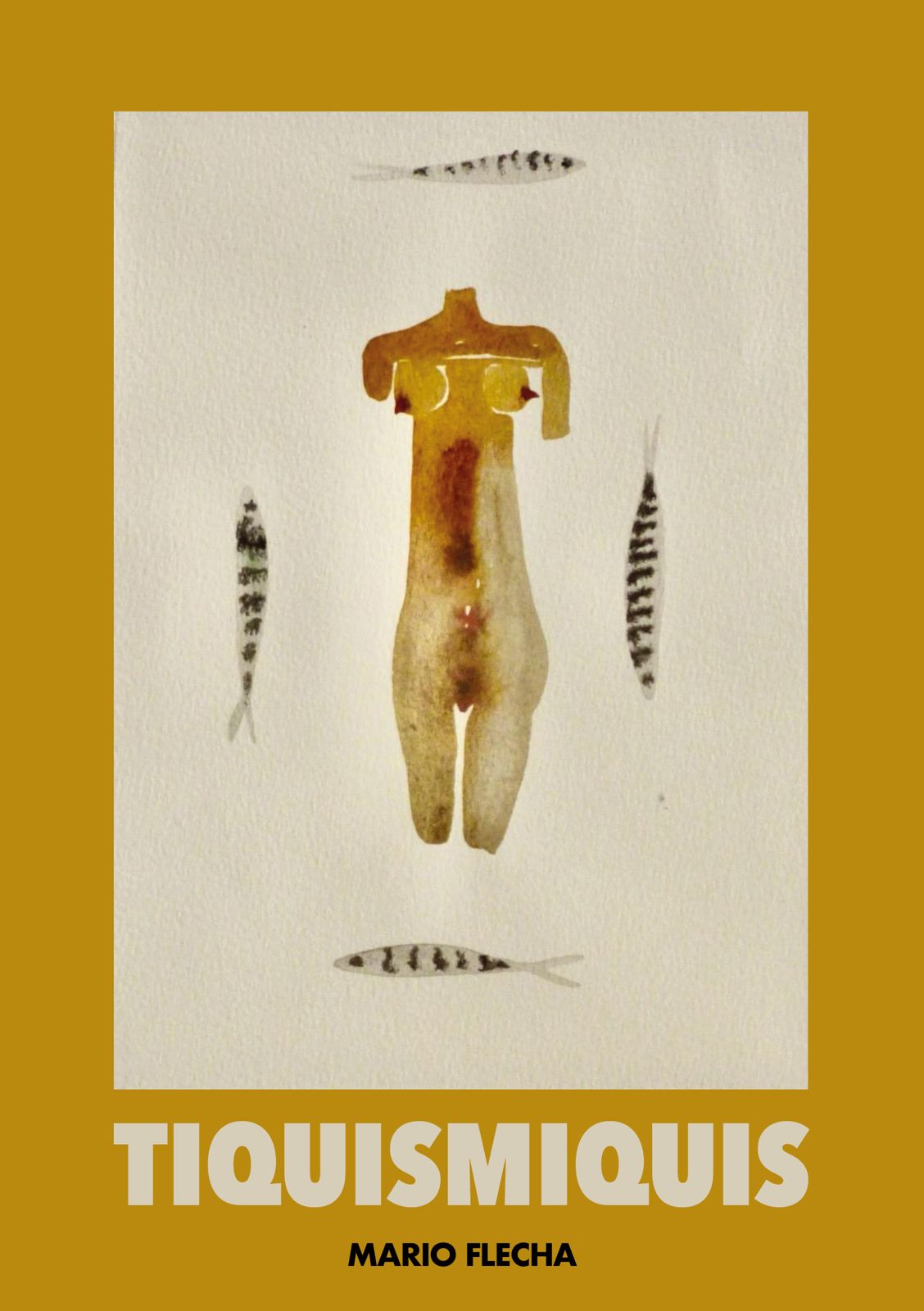
Tiquismiquis Book cover
Flecha started out as a journalist although he never worked as one except for a period when he was very young, around 15, when he worked for La Crónica newspaper: -
“I was doing ‘refritos’ which means stealing [or rehashing] the news gleaned from other newspaper outlets – so I would change things to make it look new, so they couldn’t prove we’d taken it from them. That was a good experience but then I got fed up doing that, so, more recently, I edited and published a magazine in the UK, called UNTITLED. It was, exclusively, a contemporary art magazine. We started with reviews only and then suddenly we became more committed to do something else and we produced further critiques. It ran about 10-15 years which was also a good experience. We focussed on what was taking place in London, so it was a very local magazine. It could have gone online, but at a certain point we felt we had done enough. 15 years is a long time.”
The short stories in this collection have an ironic and eccentric humour. Some are quirky and mischievous, throwing unusual historical facts into the mix, adding an element of myths and mystery. One character, Agnes, devours esoteric books as she becomes obsessive in her search for perfection, believing implicitly that it will take the shape of a golden egg, and thus, she searches for the philosophy of life and an alchemy that works, all with a quixotic humour. She is certain she will find the elixir or youth and eternal life.
Nothing is accidental. Flecha himself as a young lad had some experiences in that tie into the esoteric: -
“What really happened is another story, when I was very young in Buenos Aires, there was a sect who had been around recruiting young people. I was young and a bit silly and I liked all the stories about [George] Gurdjieff [1866-1949) and Madame Blavatsky [1831-1891] a Russian-American mystic who co-founded the Theosophical Society and P.D. Ouspendsky [1878-1947] they were esoteric, so I got involved with them for a little bit. Their prophet, at the time, was a guy called SILO. He was based in Mendoza and Bs As, from where he operated. After a while I realized these were totally mad people. But it was fascinating, and even after being in the group I felt some of that.”
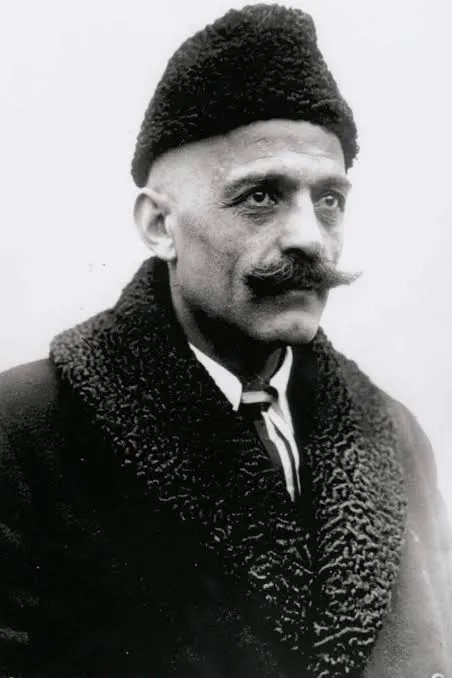
George Ivanov Gurdjieff Russian esoteric philosopher
Indeed, these ideas create another level of consciousness and madness, with little contact with reality, perhaps touching down to earth every now and again here and there, much like a twister in a storm. That play with reality filters into surrealism and magic realism that pops up in many forms in the stories in Flecha’s collection.
In ‘Agnes la Ibecenca‘ Flecha references these esoteric writers and mystic philosophers and ties them into his characters. These philosophers were people who created their own universe in their search for an alternative consciousness, and, on the way, influenced a number of other people and writers, including Katherine Mansfield.
“After I left them, I found out that Katherine Mansfield, the writer, was part of their community, with Ouspendksy & Gurdjieff. She was very ill at that point [with the TB that was to kill her], and[yet] they told her that the best thing she could do was live in the barn with the cows.”
…Probably accelerating her demise!
These other-worldly references to alchemy, the occult, myths and legends, also tie into the unusual and surprising historical references that Flecha injects into at least two of the stories, with tales of the Spanish conquest, that, today, seem absurd and fantastical, having been so lost in the mists of time that they seem to have come from another world. Yet, they have become ever more relevant as there is, currently, an historical revisionist movement in Spain.
“One of the stories that mention the Spanish Conquest was commissioned by a friend of mine because he wanted to do the illustrations. It is the one about the founding of the city of Bogotá [NUEBO RREYNO DE GRANADA] The other one I wrote because an historical revisionist movement in Spain is trying to re-tell the stories making out that the Spaniards were good and the English were bad. They want to sanitize the history of the Spanish Conquest. But I think all conquerors were brutal, so… they might have done some fantastic things, but millions of people died- and [think] how they killed Tupac Amaru…who was quartered by 4 horses galloping in different directions… You could not be more brutal!”
Flecha’s introductory quote for the story is by Eduardo Galeano the Uruguayan writer: -
“They came. They had the Bible and we had the land.
And they said: ‘Close your eyes and pray’
And when we opened our eyes again, they had the land and we had the Bible!”
Flecha also uses a quote from one of his own stories as well: -
“We, the South Americans, suffered from the good intentions of 4 empires. The good intentions of the Spanish and the Portuguese were displaced by the good intentions of the English and now it is the turn of the [North] American’s good intentions… Yes, the continent has been plundered of its resources and killed and tortured in the name of civilization and democracy for ever, and that continues in some ways, right up to this day. To be more accurate it would be 5 empires, as China is making its own headway as well.”
Magic dream boxes mingle with dreams of El Dorado, just as it did in the Spanish conquest when Gonzalo Ximénes de Queisada y Ribera “departed from the newly created port of Santa Marta in the Caribbean with 500 Spanish, 1500 Indians, 8 priests, 800 pigs, 600 cows, 150 horses and various brigs and then penetrated the jungle world, with its insects, strident sounds and dangerous reptiles.”
It is an easy word play from Don Queisada to Don Quijote, for they were both chasing windmills, but it is hard to know where you stand with dreams, as Flecha uses another quote for Jorge Luis Borges: -
“Yesterday I dreamed I was a butterfly. Today I know not if I am a man who dreamed he was a butterfly or a butterfly who dreamed he was a man.”
In “Ferrari Rojo’ (The Red Ferrari) dreams are right at the forefront, as Alfred, trying to make Julia happy, decides to play a raffle to make her dream come true. But is it his lucky day?
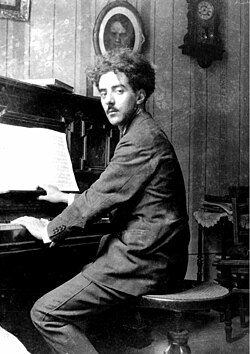
Felisberto Hernández at the piano
It is not surprising to discover that one of Mario Flecha’s main influences have been the writings of a Uruguayan author called Felisberto Hernández (1902-1964). Hernández was also a composer and pianist, who largely earned his living playing the piano for silent movies in the theatres. But despite being relatively unknown, he is regarded as one of the most original figures of 20th Century Latin American Literature. Born in Montevideo he started to write stunning imaginative short stories that had led to him being considered the forefather of magic realism, influencing significant figures like Gabriel García Márquez, Italo Calvino, and Julio Cortázar They have all mentioned him as being a central figure that influenced their creative output. Famous short stories of Hernández, including “The Balcony” and “My First Concert” and “The Flooded Room” also influenced the quintessential filmmaker like the Quay Brothers, who made a film about his life and work in 2013, titled “Unmistaken Hands: Ex Voto fh.”
Flecha openly admits to Hernández’s powerful influence in his own work: -
“I always admired his work and I still do. A lot of people have learnt from him including Cortázar and García Márquez. Then [I also looked up to] Argentinian Roberto Arlt (1900-1942), Leopoldo Marechal (1900-1970) and Borges. I used to have a problem with Borges. I liked his writing but I think he was terribly conservative which I couldn’t stand when I was young. Until my mother gave me a book of Borges and I started reading the poems and realized: ‘My god, he’s good’. I think it has to do with the idea that we read things with our own [experiences and] story behind – so at a certain point in our lives I might read a book and I think: ‘I’m not interested’. Then, ten years… or 20 years later, I read the same book and I think: ‘why was I so silly?”
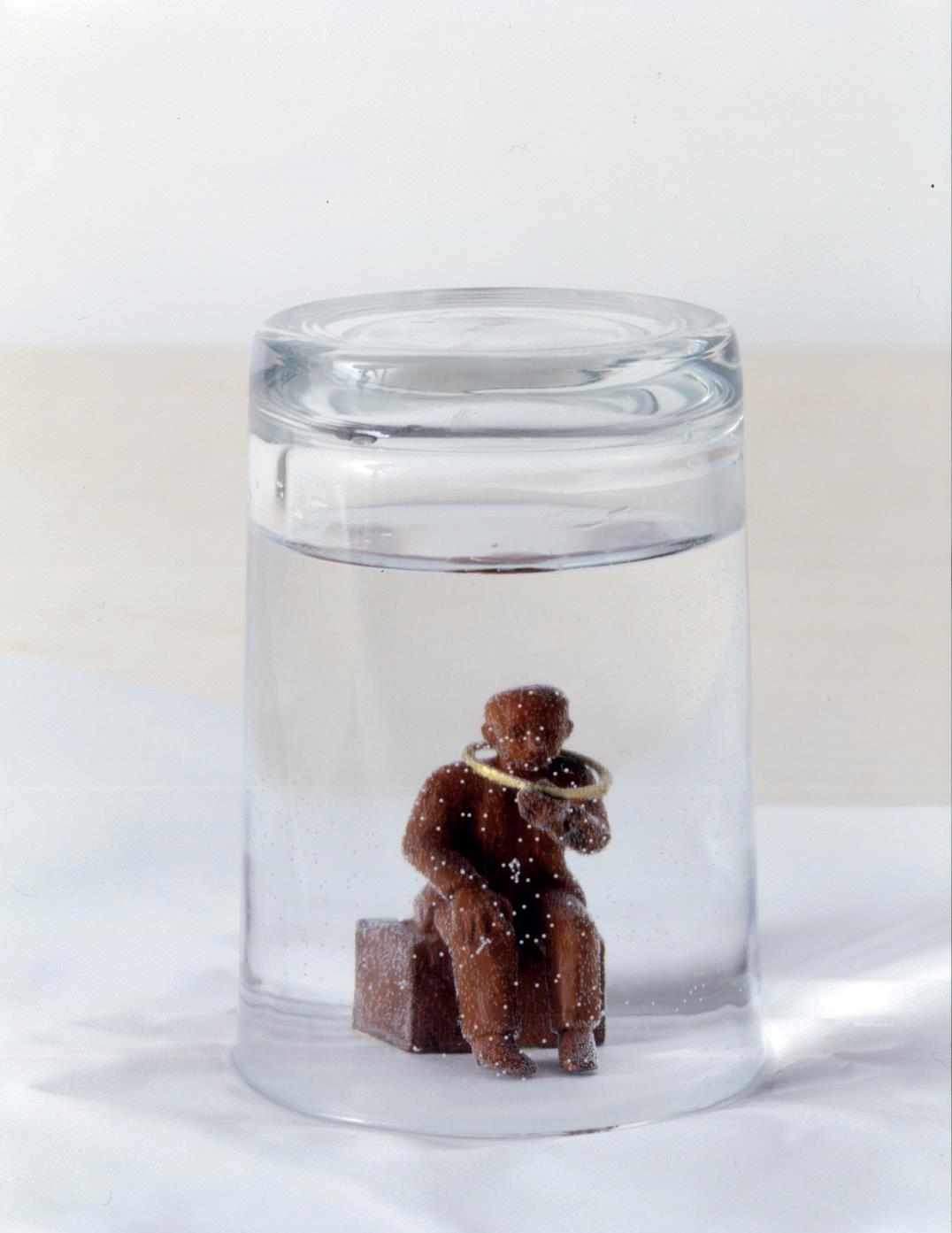
Francis Alys- Black Man seated under a glass of water- 2003 Sculpture- Jafre Bienale
A number of these short stories are written in the first person. This creates an instant intimacy together with the sensation that you are the only person to whom these words are directed, so you become complicit, being the only one privy to the secrets of the stories. This was a deliberate decision by Flecha: -
“I see it as a jigsaw. The pieces individually mean nothing, but together they come to have meaning like a jigsaw that gets together and then creates the [image of] the situation and in that case, it’s important for me as the narrator, to be involved.”
In the end, Flecha puts his art all in a nutshell in one simple sentence: -
“I always try to capture the contradiction between the absurdity of the story and the verisimilitude of it- so I try to create a fiction that works to the fantastic through the realism. I think that is it, for me.”
TIQUIMIQUIS by MARIO FLECHA
SHORT STORIES in Spanish
AVAILABLE from: -
www.goodreads.com / www.amazon.co.uk /and other outlets
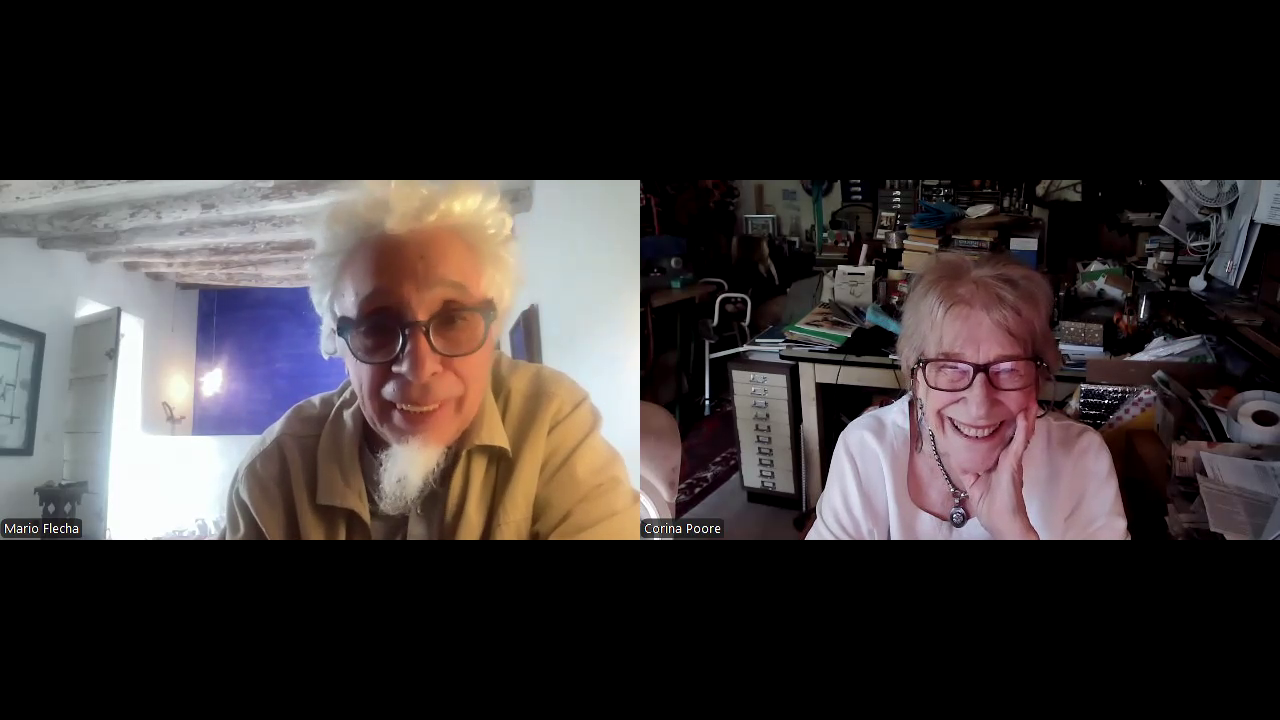
Mario Flecha and Corina J Poore