
When we first interviewed Renata Flores post-lockdown, after her Quechua version of “The way you make me feel” went viral, the girl from Ayacucho was still a complete unknown. Since then, after being recognized as the “Artist to watch” at los Premios Juventud 2025, the US and European media has been all over her, dubbing her ‘Queen of Quechua Rap’, with features in The New York Times, BBC, The Guardian, El País, Remezcla and Vice. And now, finally, hot off winning at the Video Prisma Awards 2026, she makes her European debut at London’s Jazz Cafe.
Today, she calls me from the stairway of a fitness studio, in between meetings, a pop star with a full-on schedule, as she waits for a taxi to take her to the recording studio in Lima. A far cry from the girl at 13, who got just eliminated from The Voice Kids Peru.
“I don’t think that 13-year-old Renata could imagine everything that was coming, but I do think she had this impulse to do things, to make music. She was a very dreamy girl,” laughs the bubbly, energetic 25 year-old, on the cusp of something big. “I still am today.”
That rejection was a blessing in disguise, Renata reveals, for if she had succeeded, she might never have started singing in Quechua.
"It wasn’t my first language. My grandmothers spoke it fluently, and my parents occasionally spoke it at home, but I only knew a handful of words. But after leaving the contest, I decided to do covers from my city, from Ayacucho,“ Renata reveals, as she appears on my screen. "It was the age of covers, and strangely, I did better singing in Quechua, a language that wasn’t often heard, spoken, or very well perceived.”
Translating Western standards into Quechua became a way for Renata to reconnect with her roots and bond more deeply with her grandmothers. Since then, Quechua has been a formative part of Renata’s artistic journey, drawing her into the limelight of mainstream media.
Growing up in Ayacucho, Renata’s “very supportive" family environment spurred her to chase her dreams. Both her parents had played in a rock band, while her aunties sang traditional Quechua songs. Beyond that, her mother ran a cultural association and a music academy and supported her from a young age.
“I have seen since I was a little girl, how my mom has done so many things, not necessarily with a big budget or lots of money, but with this love for art and music, and a belief in how other people can become agents of change through art. And that’s always been part of our roots, part of our identity, as Ayucachanas, Peruvianas, Andinas. And that’s always made me dream big.”
Even though Peruvians have been singing in Quechua for eternity, Renata admits that her covers, and her winding road to international recognition and performance, has put the language on the commercial map.
“Peruvians have always been discriminated against for speaking Quechua or even saying that they knew how to speak Quechua. A lot of people changed their last names so that they would not be in Quechua, and now young people in our generation want to investigate, find out what their last name really is, and reclaim it.”
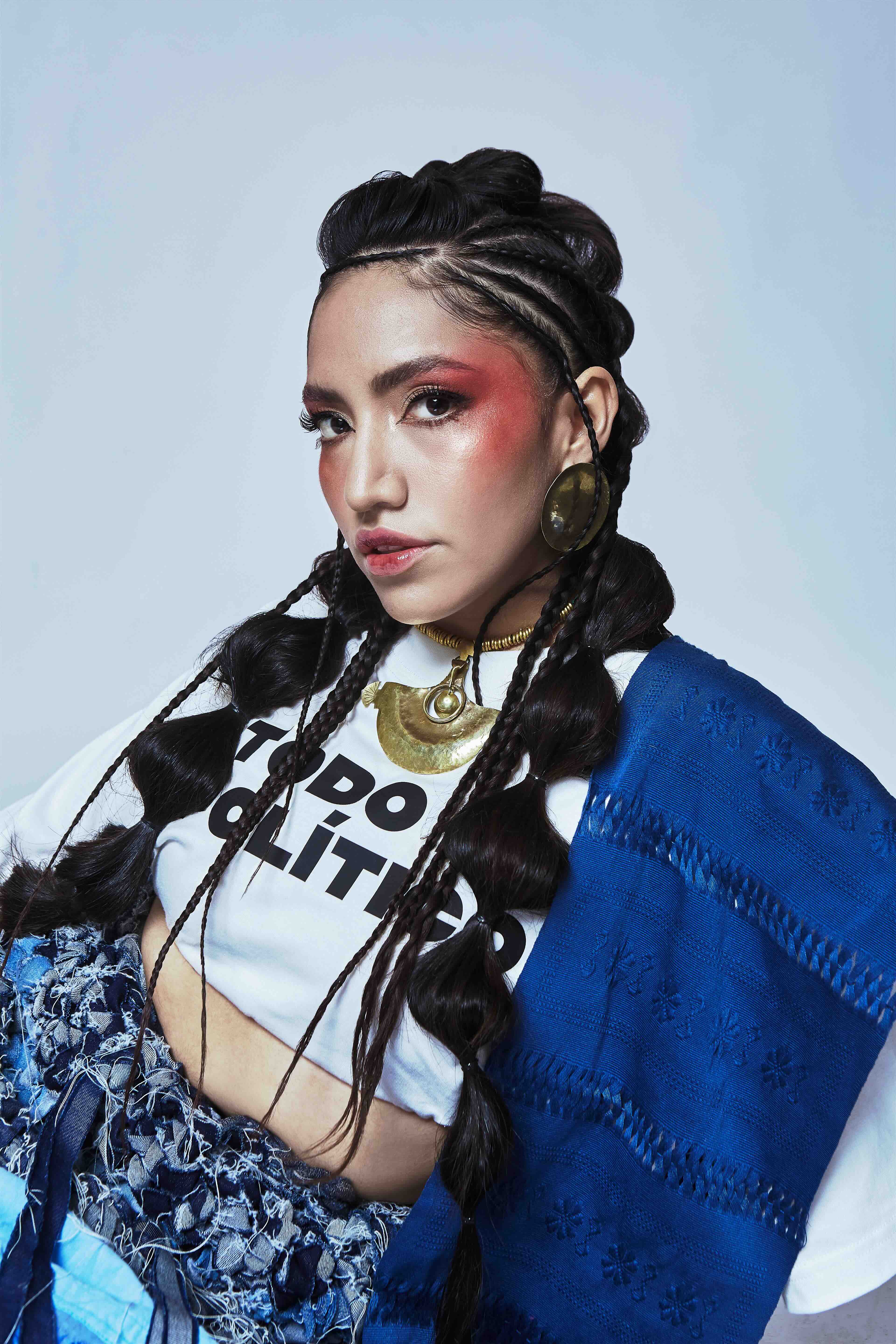
Whether a trend or a movement, she hopes it only continues to grow. While there is much focus on the negative impact of social media on GenZ, Renata recognises that it has been one of the most powerful tools for reshaping perceptions of Quechua, as it enabled her to transcend the structural racism entrenched with the physical borders of Peru and Latin America.
“Without a doubt social media opened a huge door for me, to be able to connect with other artists, new movements and media. So many things are being created. There are audiovisual producers who are just starting out from the Andes, making short films, anime series in Quechua, there’s so much that I’ve learnt about thanks to social media.”
Her online fanbase – or allyu (family), as she calls them – are supportive and wide-ranging in age. “We always treat each other as family here,” she says, adding that even just referring to fans as ñañay (little sister), helps celebrate the values that Quechua promotes. “It’s an ancestral language with lots of depth and lived experience, centred around work as a community, work as a family, always thinking about the other person. That reciprocity, is something that Quechua has and the Andean culture in general.”
Even her latest single – Sígueme (follow me), a collaboration with indigenous Mexican singer Xiuhtexcatl – was born out of an Instagram DM. He pitched the song to Renata after an intense period of political turmoil in Ayacucho in December 2022, when the military killed 10 peaceful protesters and innocent bystanders after they gathered to protest changes to the country’s constitution.
“He wrote to me on Instagram and told me he was a releasing a new album, and that he wanted to collaborate with me on this single. He sent me the song, and I listened to the lyrics, which were so inspiring and hopeful. They had a lot to do with what was happening here in Peru, because at that time, after the massacre in Ayacucho, the community was in lots of pain. Listening to the song gave me the hope that we can connect across languages, across cultures, that we have more things in common than we may think.”
The song Sígueme is a celebration of Indigeneity in the face of injustice and repression. Xiuhtexcatl and Renata take turns rapping in both Nahuatl and Quechua, celebrating the environment through the lens of Indigenous cosmology. The music video was shot in Puncupata, considered an Andean sacred space, high up in the mountains where vicuñas are raised.
“Being an indigenous woman, a descendant of Quechua, an ancient culture, with lots of ancestral wisdom, I feel we are getting lost and it always made me sad. “
“Not all of us, but most of us are losing that connection with nature. Like the harvest of water. A lot of people say, well how are you going to harvest water? But it’s a practice that is still ongoing today, in communities in Quispillajta and Chuschi.” She believes that it’s thanks to them that during times of drought there is water in Ayacucho, to water plants, to grow food, and to drink. “It also gives us this awareness that water is life, that we are life, that water flows in our body, what would we do without water?”
“Sígueme has that layer of meaning, and also one of union, like the Condor of the South, and the Eagle of the North are uniting. There is a message that a new era is a beginning, a new stage in our generations.”
She’s referring to an Incan prophecy. When the Eagle of the North and the Condor of the South fly together, the legend says, the spirit of the land will reawaken in the 5th pachacuti. Both Mayan and Incan people believed that time was divided into different pachacuti, different intervals of 500 years which corresponded to times of turmoil or peace.
Renata believes that Indigenous languages also express the lived relationship with nature that Indigenous culture carries. “There are words that don’t exist in Spanish that do in Quechua, that must be rescued, that have a lot to do with ancestral wisdom and care of the land, Pachamama, and water. There are plants that have names in Quechua that have different meanings in Spanish.”
She tells me about a plant called yawar śuqo, which translates to the Spanish chupasangre (blood sucker). Blood in Quechua is associated with life, strength, and earthly connection, while in Spanish it’s associated with death. The Quechua name, and its association with life, reveals the true nature of the plant: it actually helps heal wounds.
Renata’s next album, Traficantes (Traffickers), is expected to come out at some point later this year.
“The truth is that I am very excited to see this new album, because it has taken me a long time to make it, and I think it has been for the best, because in this time, I have also changed, I have grown, I have matured, and experienced other things.”
This album will focus more on herself and her family’s experiences, lending it a more intimate perspective than her last album, Ixqun (nine), which celebrated the lives of historical Indigenous women.
Written after the massacre in Ayacucho, the album is a response to the political violence that her family and community has endured since 1969, when rebel group the Shining Path first appeared, immersing the country in decades of guerilla warfare and leaving 700,000 people dead. Many of them were Indigenous agricultural workers and Quechua speakers in Ayacucho, who were disproportionately affected by the violence.
“It is personal, because it talks about my family who have lived in these times, who have also lived through injustices, discrimination.”
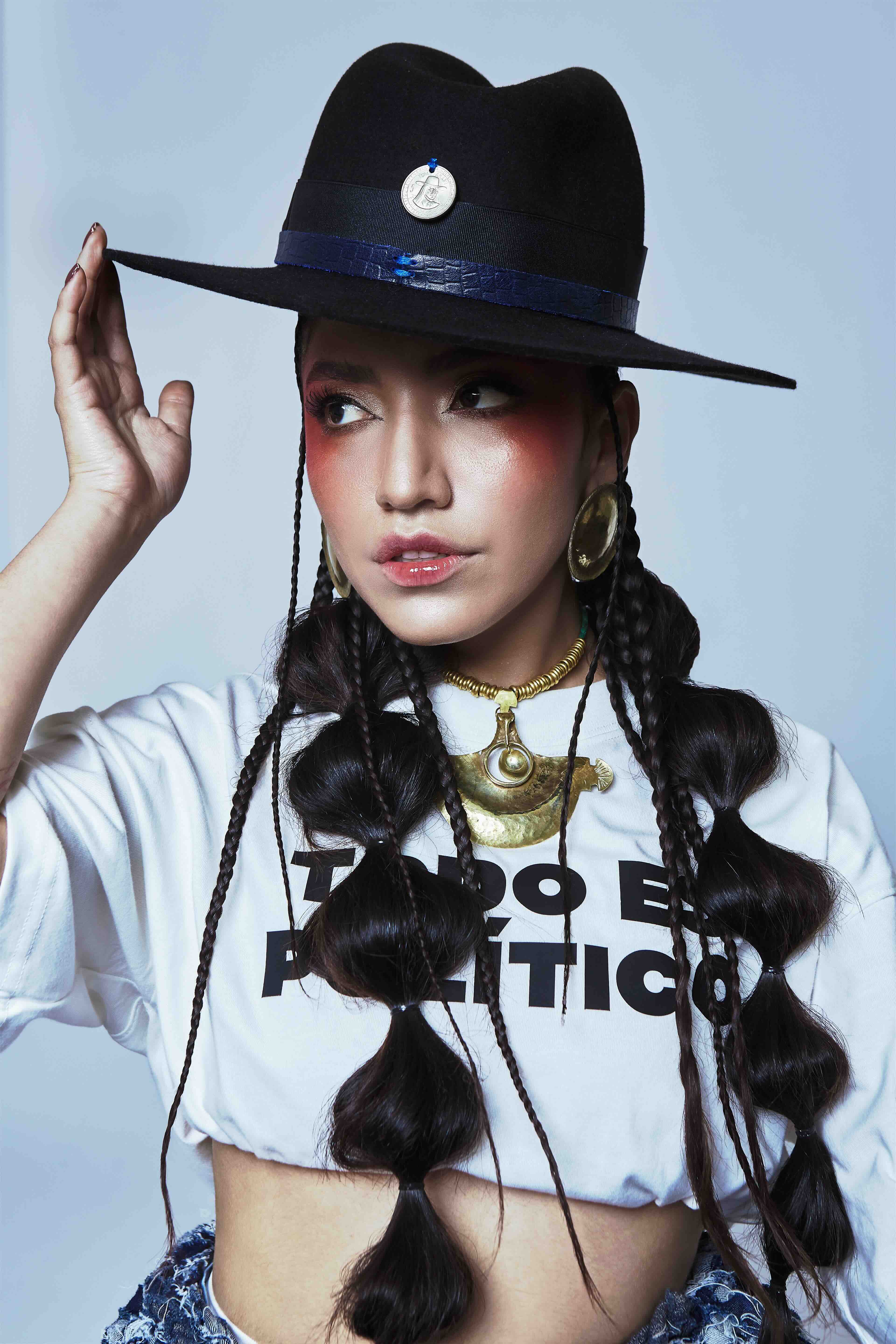
To Renata, the massacre in Ayacucho feels like a reminder of the violence that gripped her home when the Shining Path were at its peak. “At some point, violence here in Ayacucho, like in the 80s, has been a terrible catastrophe for many families, for many people who have been murdered senselessly. It is the same story that is happening. These things are repeated, and I think we recognise them.”
That cyclical violence, seems, unending. “I have been, on the album, in some ways predicting the future. Calling someone a terrorist is now something that is being used to criminalise Indigenous groups, or protesters, when there’s no evidence of that. In Ayacucho, a massacre took place where many people came to protest, about 200-300 people, and what the government did was murder the brothers and sisters of Ayacucho, and there were people just walking around who were shot.”
There is a universality to the violence Renata describes which also cannot be ignored. “What is being seen in Perú, and what is also being seen in other countries, is that if you don’t act, these events will repeat elsewhere, and violence will only continue to be normalised.”
“It is an album that in history can be shared with other stories. Traficantes has this personal context but also a social context, a world context. We are creating a world where everything is the other way around, and that’s what Traficantes is about.”
But this isn’t to say the album will be entirely negative. “You can also traffic good things, you can do business with music, truth, all the good things a person can do. There’s a hope that you can change things. Violence only brings more violence, and I think that is not a solution.”
“Really, I have a responsibility to speak for my land, for the people there. I feel like it’s an incredible opportunity to be able to speak, and have people listen to me.”
Her sound may keep evolving, but Renata Flores’ mission to celebrate Quechua language and Indigenous people, has not.
You can see Renata perform live in London in May, as part of La Linea music festival. https://comono.co.uk/artists/renata-flores/