“Sometimes a map is the measure of our paths in the world”
The film opens with the charm of a child asking: What are maps? A good question. Are maps only about understanding where you are in the world, or are they more? Are they also about paths that can take you somewhere to a future you have yet to discover, where memories of the past collide with the present?
In this moving film about grief, exile, and the search for roots and identity, director Fernanda Salgado and her team have created a stunning animated feature that experiments with sounds and visuals in a fresh and original way, combining different animation techniques to great effect. These include rotoscoping, stop-frame, cut-out, collage and more, playing with colour and textures to emphasise a range of tactile experiences. The nuanced sensuality of the music and images are well-matched with the elegance of vision in the narrative and the script.
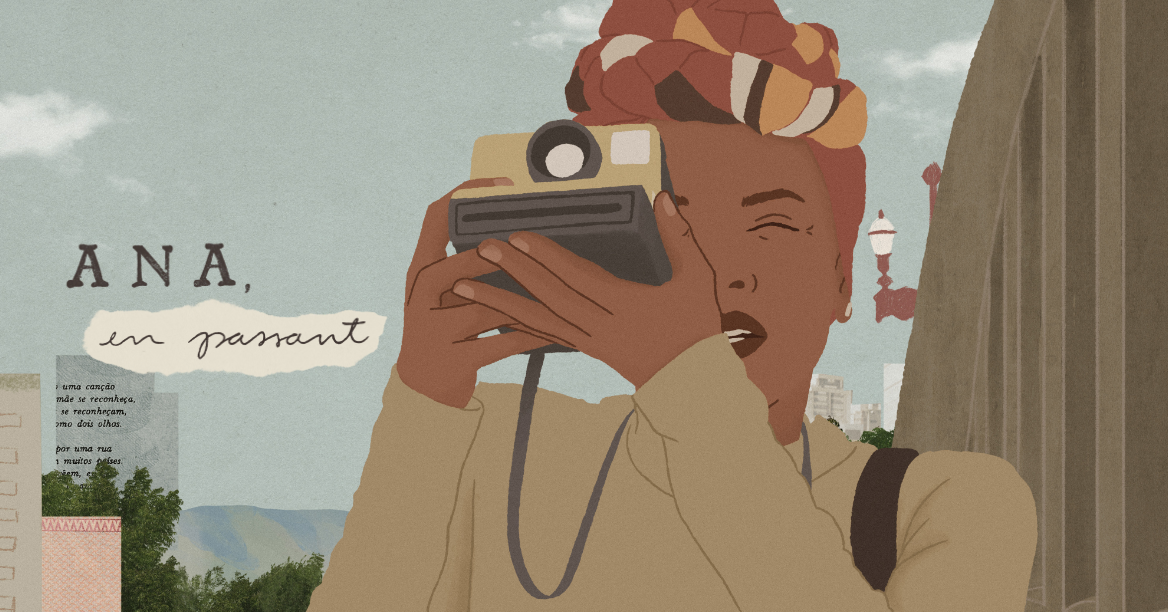
When her much loved Brazilian grandmother Alice, who brought her up dies, Ana, a young black French woman, finds herself feeling lost in Paris, the city where she was born and lived. She starts feeling increasingly isolated in her grief. Following a number of ambiguous clues left by her grandmother, she decides to travel to Floresta in Belo Horizonte, Brazil, where the family came from. There she finds Alice, a dancer, who is so similar to her as to be her double, living in her grandmother's old apartment. Alice is pregnant and they become friends. Gradually, they decipher the colourful and rich cartography of a city full of memories, and ancestral connections. Ana wanders the city obsessively, taking in the vibrant city with all its glory, day after day. As she grieves, she searches for memories to bring her grandmother alive, but more so, to discover her own roots and her identity.
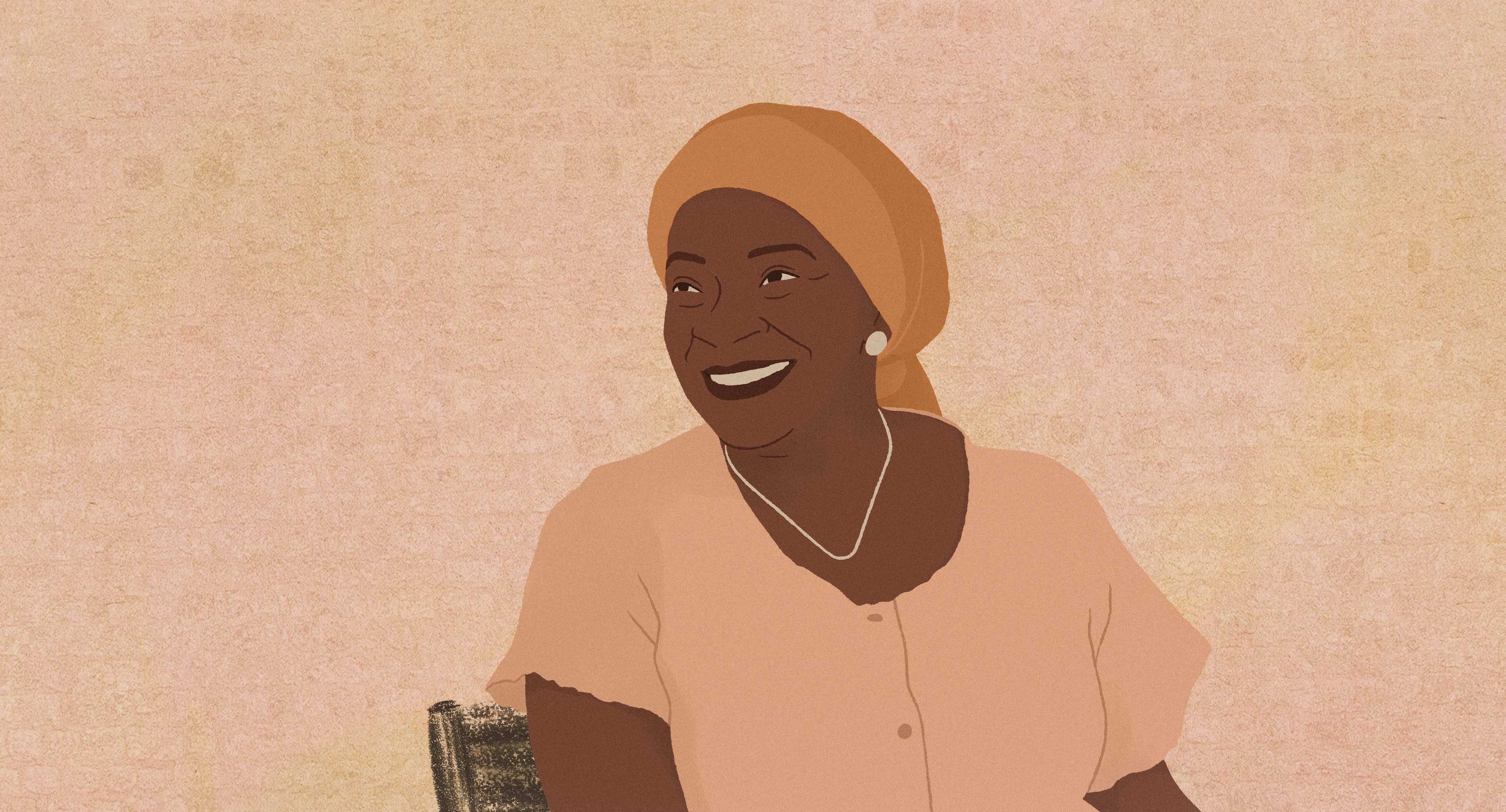
Alice, Ana's grandmother played by the great Zezé Motta.
Ana (Jéssica Pierina) cannot properly mourn her beloved grandmother while there are such large gaps in her life. We never learn why her grandmother Alice and her husband decided to emigrate to Paris, leaving behind an apartment in Floresta, but Ana realizes she must investigate this mystery. There is an echo of The Double Life of Veronique (1991) by Krzysztof Kieslowski for when she arrives at the apartment, she finds another girl who looks astonishingly like her, living there who is also surprisingly called Alice like her grandmother. Given the coincidence of the names, we find ourselves wondering if she is real or somehow a figment of Ana’s imagination? Salgado herself, however, is very clear about her feelings towards this conundrum: -
“I want everyone’s feeling about this to be kept to themselves, but for me she is very, very real, she is very concrete. She is a real person.”
Whatever it is, Alice is instrumental in helping Ana to deal with her past? And, as in many a magic fairy tale, there is also the helper, in this case, the very enigmatic and warm André (Carlos Francisco), the postman, who opens up paths for Ana to travel along.
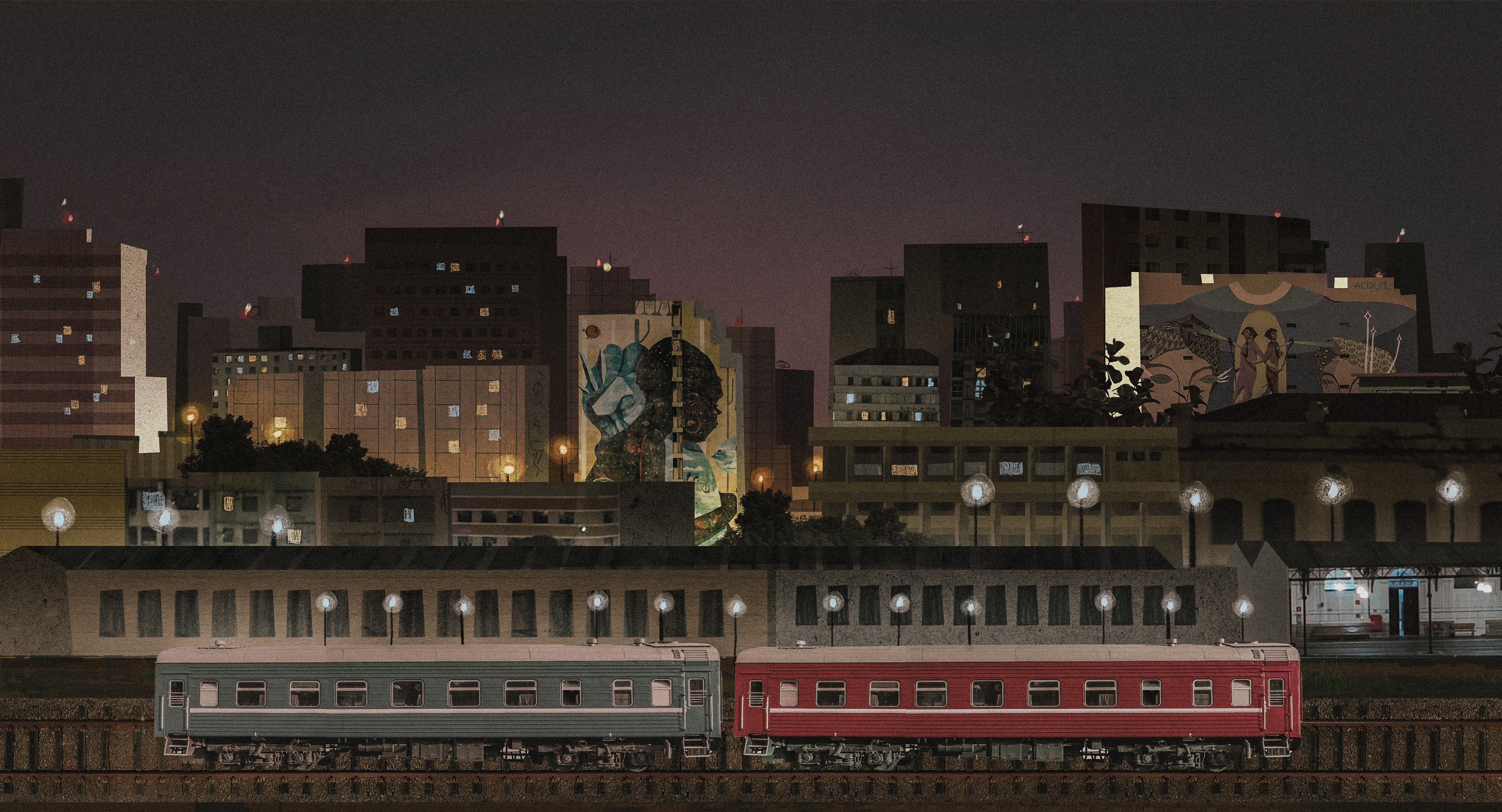
Belo Horizonte in Ana, en passant.
The historical barrio (district) of Floresta is the oldest and most traditional in the city of Belo Horizonte. Having been founded in 1897, it has a long mining history which brought prosperity and wealth in the past, so that Floresta has a number of wonderful buildings, full of character and memories, many that once belonged to her grandmother, now Ana tries desperately to find them and understand her own past. Like her grandfather before her, Ana searches for answers by wandering the city and taking masses of photographs with which she starts to line her walls.
What can you capture in a photograph? Can the spirit really be captured in an image forever? We are drawn into Ana’ s journey and moved by her grief, memories, roots, identity and even the echoes of exile that she tries to unravel. As Ana re-examines the images, they come to life for her. Is there also a relevance to being a black woman in Paris, or being a black woman in Brazil?
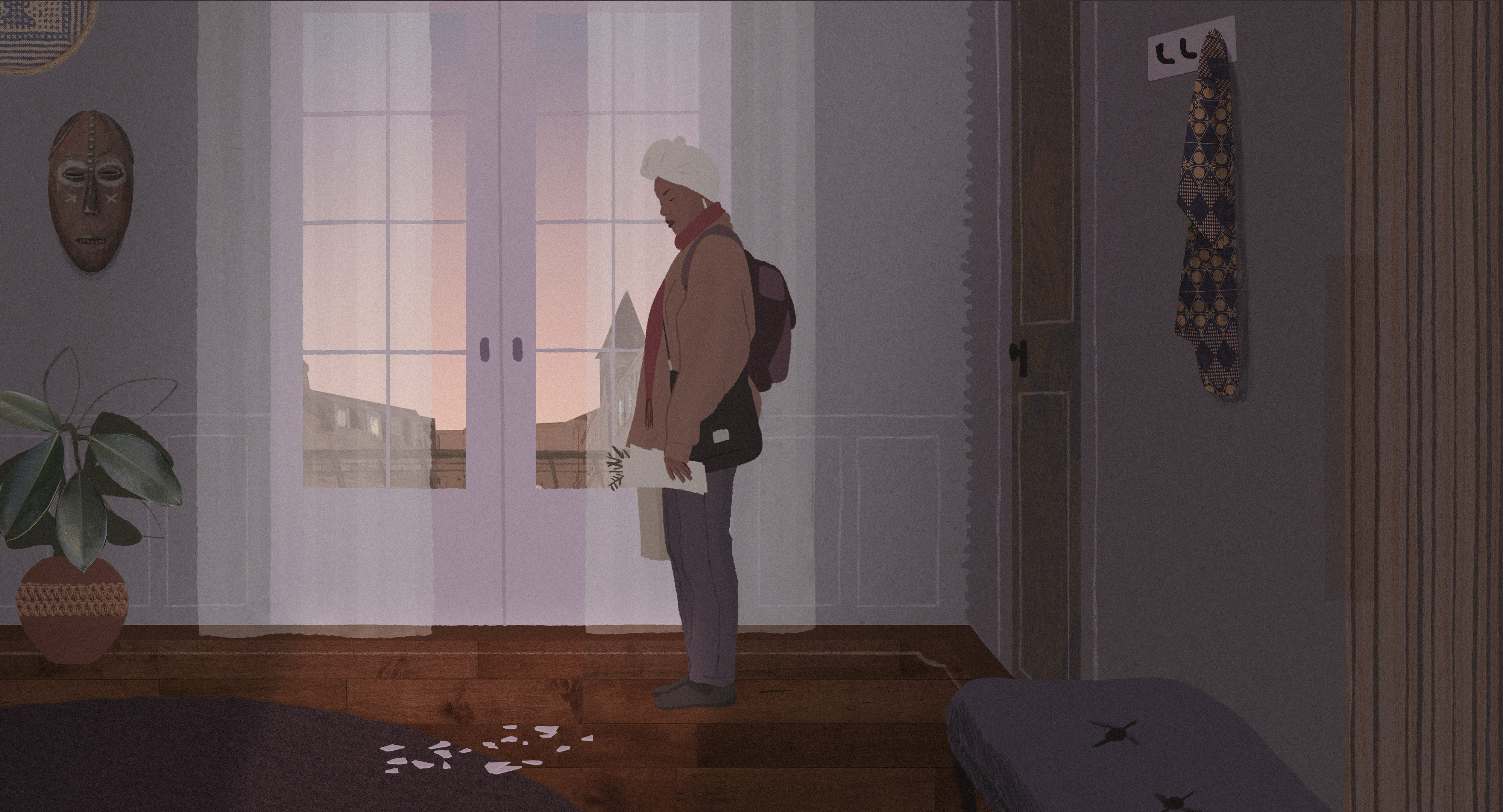
Both roles of Ana and Alice are played by Jéssica Pierina form Ouro Branco (Minas Gerais).
Salgado: -
“The character of Ana is one we looked at many, many people as she was a difficult character to cast. No only Ana but Alice, in someone who would be able to [move] between these two characters. Not only to build them very differently and Jessica did this so brilliantly. She is very serious and dedicated to her work. We had many conversations in trying to define and understand these two characters. Where do they touch, and where do they drift apart? I can hear her and see in her body language when she is Alice or Ana.”.
The grandmother Alice, is the wonderful Zezé Motta.
“The references to her body of work are just immense so when our casting producer suggested that we invite her I did not think it was possible. She beautifully accepted and it was a joy to have her on our set, and work alongside her and learn from her. She brought so much potency and strength and also the delicate aspects of the grandmother. It was beautiful to see them developing a relationship while on set”.
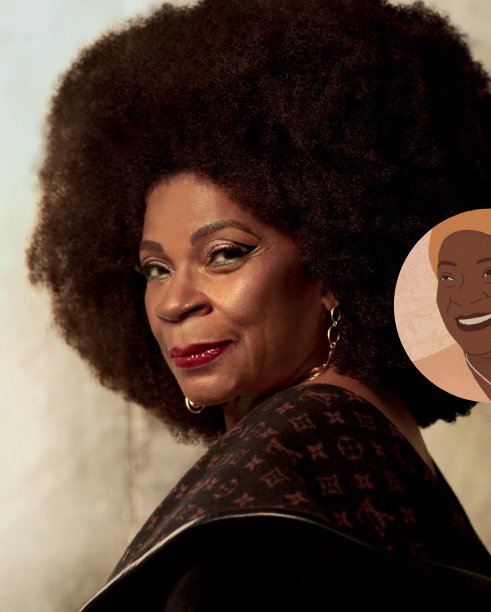
Zezé Motta is a prominent Afro-Brazilian actor and singer who has garnered many awards including 3 Grande Otclo Awards plus an honorary Grande Otclo. She debuted in a play called Roda Viva, by Chico Buarque.
Lastly there is the charming Carlos Francisco who plays André. After many years working in theatre, Francisco has had a remarkable career in the movies, appearing in two of Kleber Mendonça Filho’s movies, namely The Secret Agent (2025), and Bacurau (2019). Bacurau, co-directed with Juliano Dornelles, won the Jury Prize at Cannes. He then went on to win the prize for Best Foreign Performance at the 2023 TIFF, for his role in Guto Parente’s Estranho Caminho (20230 Strange Road)
“Carlos Francisco is the gentlest person you could ever meet. He has been doing such wonderful work in cinema after so many years of his career in stage theatre. It was so beautiful to meet him and to construct this character with him and to discuss how we would deal with this character who is very real but is also very mythological (the helper) and how he would transit between these two facets of this personality and it was mesmerizing to watch him work.”
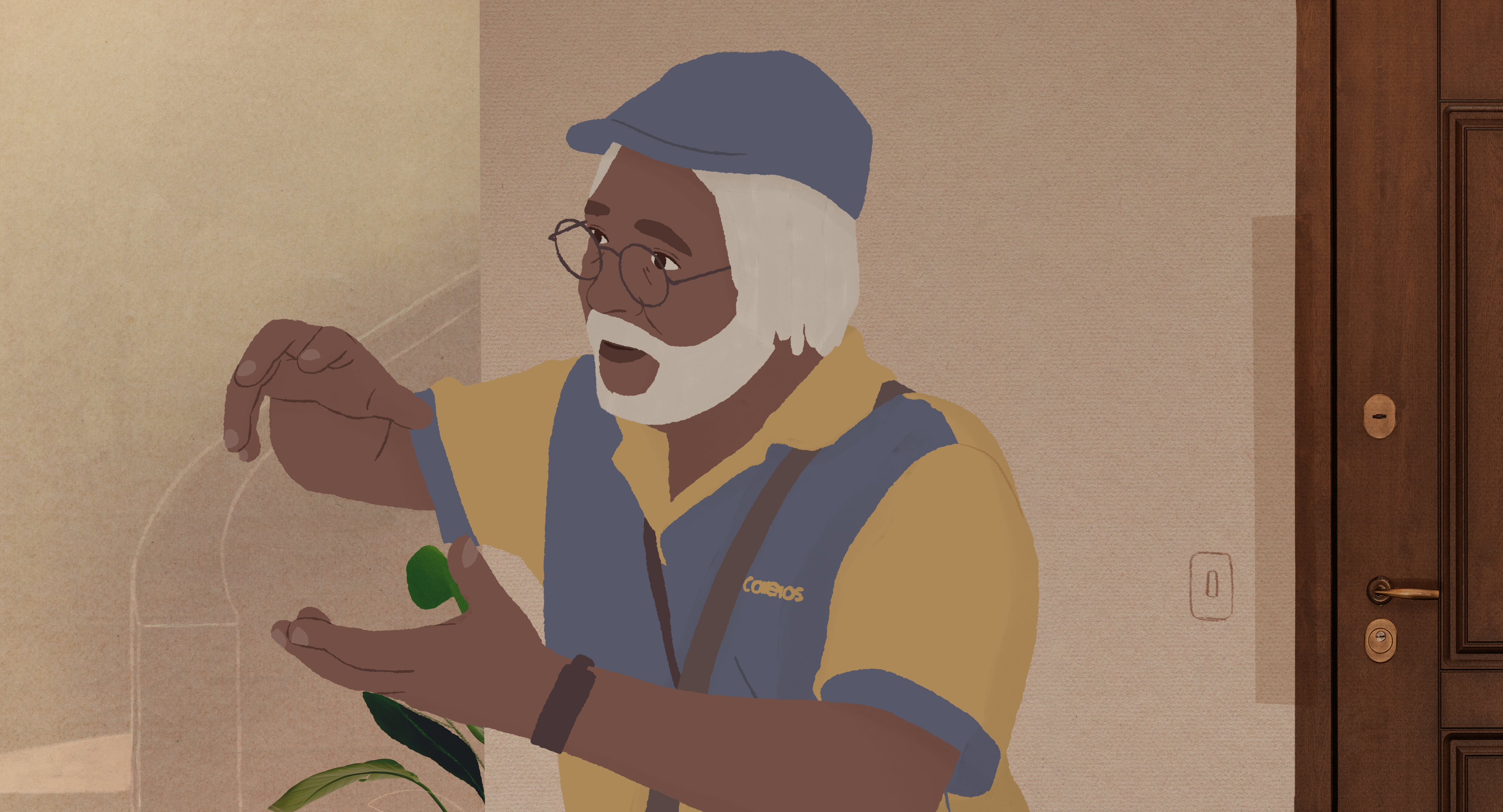
André, played by Carlos Francisco
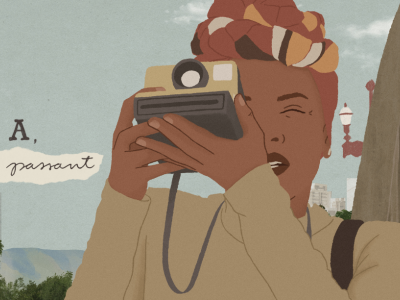
There is a lot of symbolism in this animated film that plays with the senses. Salgado with her two key creatives: Camila Kater the Animation Director, known for award winning short film Carne (2019) and Marcella Tamayo (Papaya 2025) as Art Director, created a film with vibrant images that bring urban vitality to life, capturing the soul of a city and life with their images and textures. From snake-like roads that twist around the cityscapes, to oceans and waves depicted with carefully torn papers and textures. The multi-disciplinary techniques are inventive, using drawn images, photographs and even textures that are fun, cheeky and original. As Ana takes an apple from a market store there is a ripping sound as if she had torn it from the cardboard base that it was on, very effective detail. This feature is part of a movement to bring animation into a realm that is not Disney or Pixar but equally valid.
This new style of working in animation is refreshing. Recently we also had the charming Papaya (2025) by Priscilla Kellen, and Olivia and the Clouds (2024) by Tomas Pichardo-Espaillat that also produced gorgeous animation and explored new ways of telling stories. (see below for links to their reviews)
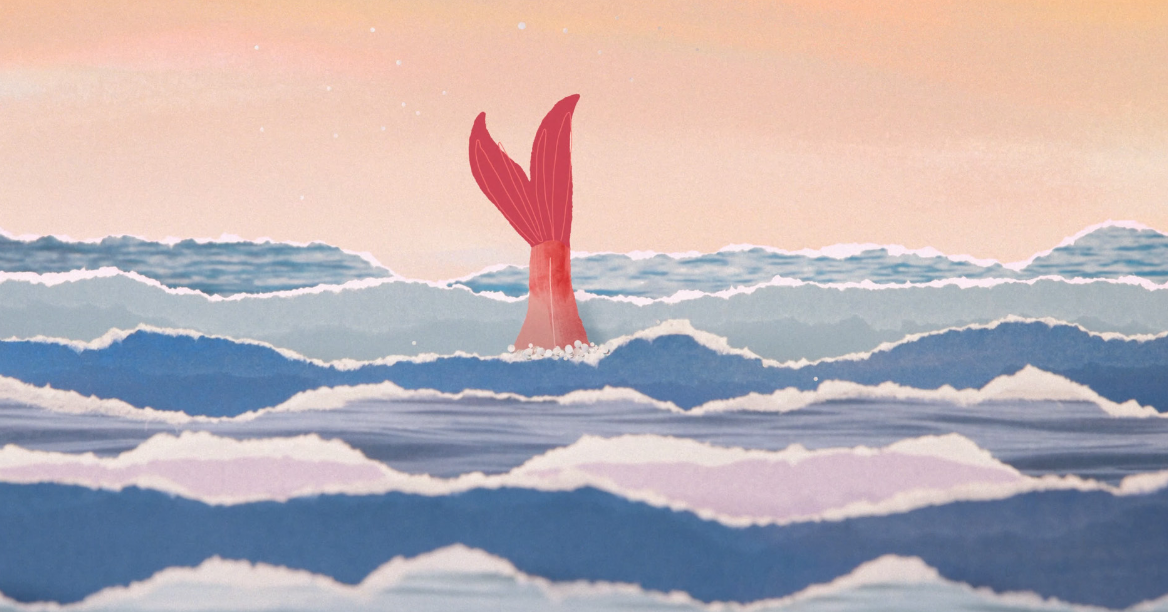
Despite Floresta being far from any oceans, there is an aquatic theme, as if immersing in one’s past is like immersing in an ocean, or is it a womb? The atmospheric soundscape has was carefully created to full effect, with the original music provided by Metá Metá, a São Paulo Jazz band. In Yoruba, the name means ‘three in one’, which is very suitable given that there are 3 band members: Juçara Marçal on vocals, Kiko Dinucci on guitar and Thiago França on saxophone. The music is fresh and evocative, very suitable as dance is an integral element in this film for the characters, as well as for the rhythmic way the animation moves across the screen.
“Isn’t life really a dance?”
The character animation is rotoscoped, but Salgado moved away from the usual simplicity by playing with a combination of flat colour areas, contrasting line outlines and rotating backgrounds. The impact is lively, inventive and fun, creating a richness to the images that add to the emotional content of the story. It is key that Salgado never lost the emotional content of the story by being distracted by the techniques.
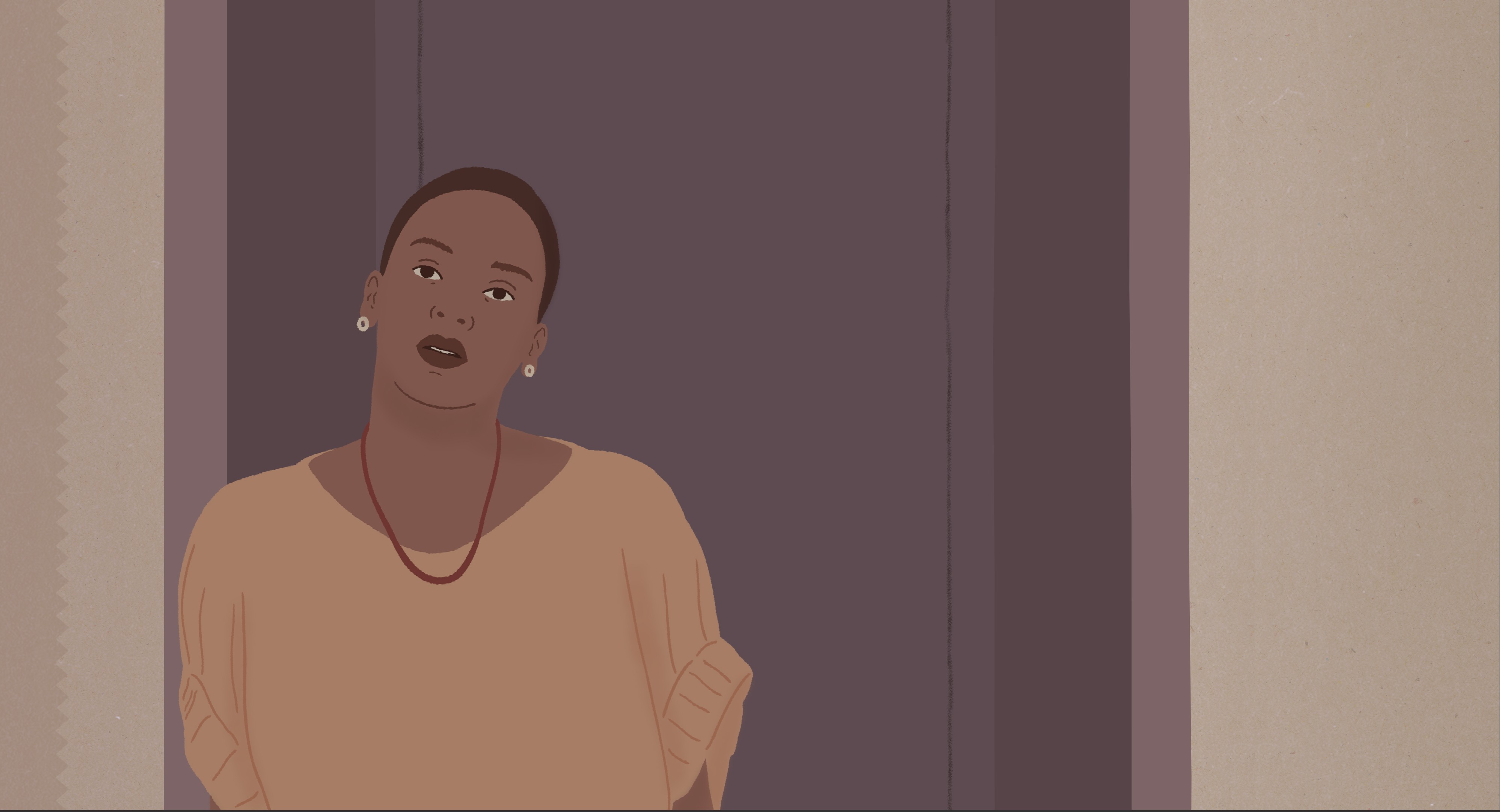
Alice, the dancer, also played by Jéssica Pierina
The narrative of Ana, en Passant is nuanced as it focusses on the suffering that lies behind any form of exile and how even in future generation are affected by the pull back to ancestral connections and shared histories that enrich who we are. Though Salgado was keen to explore the lives and experiences of these black women, you can also say that these journeys are universal and suffered by all. Unanswered questions of the past will haunt us with the need to uncover the truth.
This exciting film by the talented Fernanda Salgado is an effective and brave attempt to challenge what people normally expect from animation. While working on this production, the very hard-working Fernanda Salgado is also currently trying to find time to complete a PHD in animation, even as winter approaches in Montreal, Canada. Born in Belo Horizonte, she co-founded the ‘Apiário Estudio Creativo’ and works as a producer and screenwriter.
ANA, EN PASSANT (2026) directed by Fernanda Salgado
Was at the BFI London Film Festival
for its European and UK Premierein the ‘Journey strand’
Distributed by Miyu
Cast: Jéssica Pierino as Ana and Alice/ Zezé Motta as Alice, the grandmother and Carlos Francisco as André the helpful postman.
Ana, en Passant: written and directed by Fernando Salgado
Art Director: Marcella Tamayo / Executive Producer: Fernanda Vidigal, Alessandra Casado / Director of Photography: Safira Moreira / Film Editor: Paula Santos / Sound Engineer: Maru Santos, Bruna Coimbra Nadal, Cristiane Akie Munifisa, Diego Guerra, Anya, Ju Ruiz, Kaique Cardoso Dos Santos, Haru, Vick Barbosa, Cassiel Costa, Beatriz Dutra, Lorena Lopes, Leticia Apolinário, André Jesus, Camila Reis/ original music: Metá Metá / Additional Animation: Camila Kater, Marcella Tamayo/ Stop-Motion Photography Director: Diogo Saraiva / Stop-Motion Animation: Ana Oliveira, Catarina Cardona, Fabrício Tacahashi, Rosana Van Der Meer/ Composition Coordinator: Leonor Costa / Colour Correction: Emmanuel Forti.
You might like to view animation reviews for : -
‘OLIVIA AND THE CLOUDS’ (2024) Tomas Pichardo-Espaillat https://www.latinolife.co.uk/articles/olivia-and-clouds-2024-tomas-pichardo-espaillat
And ‘PAPAYA’ (2025) Priscilla Kellen / https://www.latinolife.co.uk/articles/papaya-2024-co-written-and-directed-brazilian-priscilla-kellen-shines-berlinale-2026