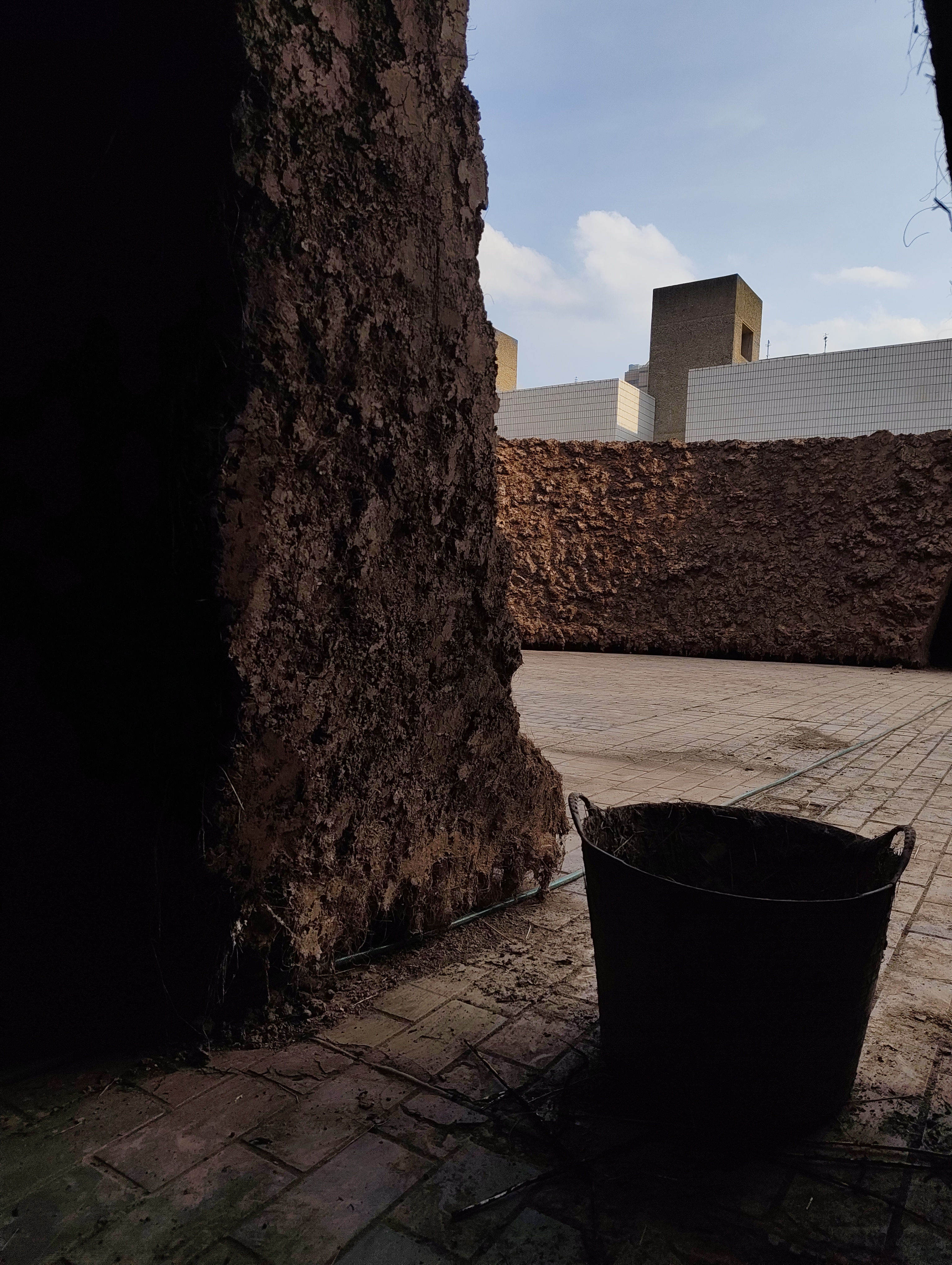
Inside, the earth is dark and dense, shaped into closing walls with roots that wrap the body and make it feel small. The smell hits first, damp, spiced, mineral; alive. Tied to the territory she grew up in, Morelos draws from Amazonian and Andean cosmovisions in which the earth is a living body we are part of, a surface not to be built upon but a force to be listened to, origo carries that understanding into the heart of one of London's most iconic modernist estates. Morelos invites us to reconnect with the maternal, with the place we come from and the one we will return to. What do we reconnect with when we return to the earth? When we smell it and feel its moisture on our skin? What do we remember?
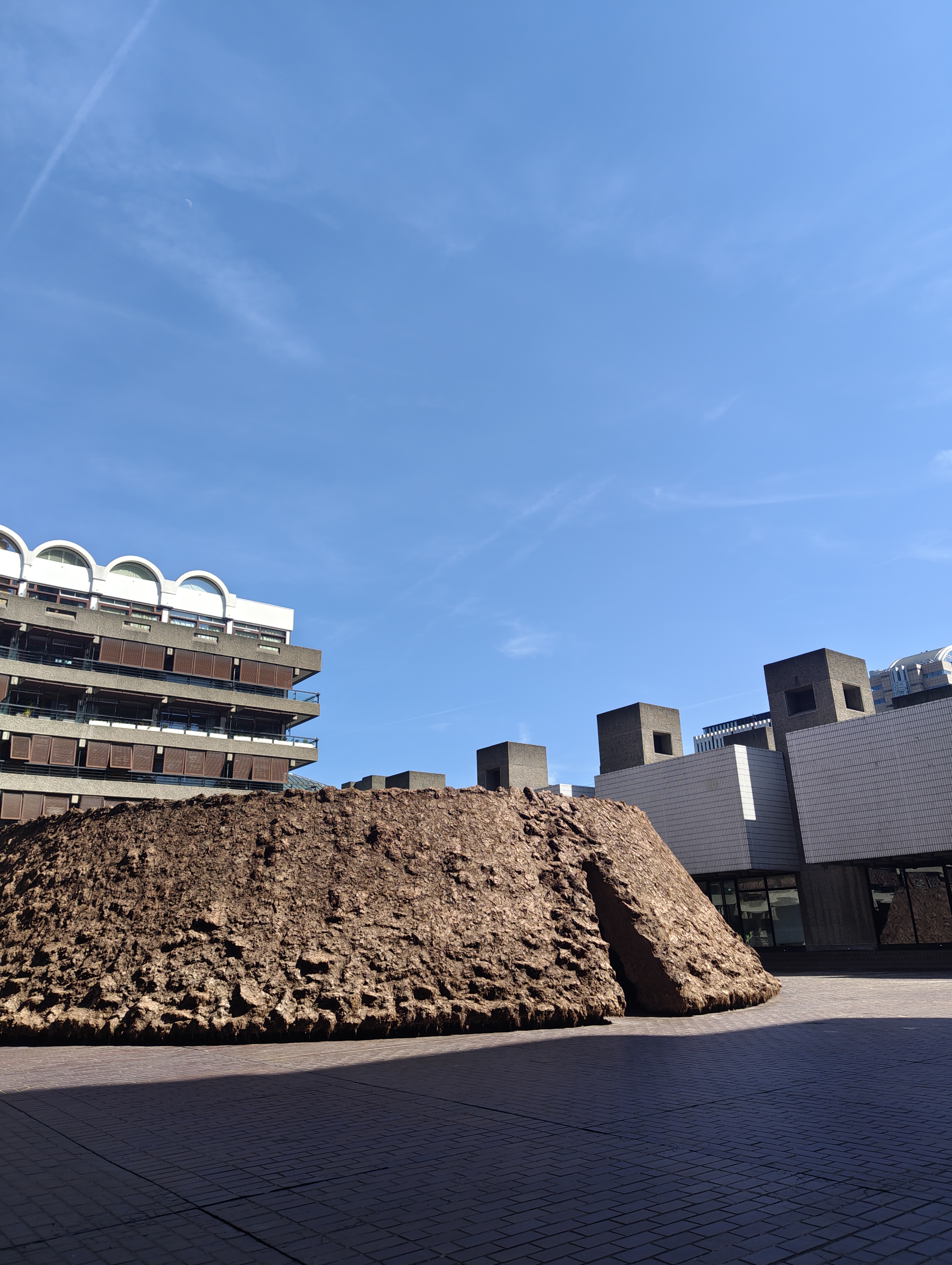
Origo is entered through four openings that interrupt its circularity, sharp cuts in the organic texture of the soil that make the threshold deliberate. You are invited to sink your body into the earth, to bury yourself. Nos en-tierra (it earths us), it lands us, it buries us a little. Over thirty tonnes of soil were placed by Morelos and her team, every gram passing through each body that kneaded, smeared, splashed, threw and sculpted, leaving something of itself in the work.
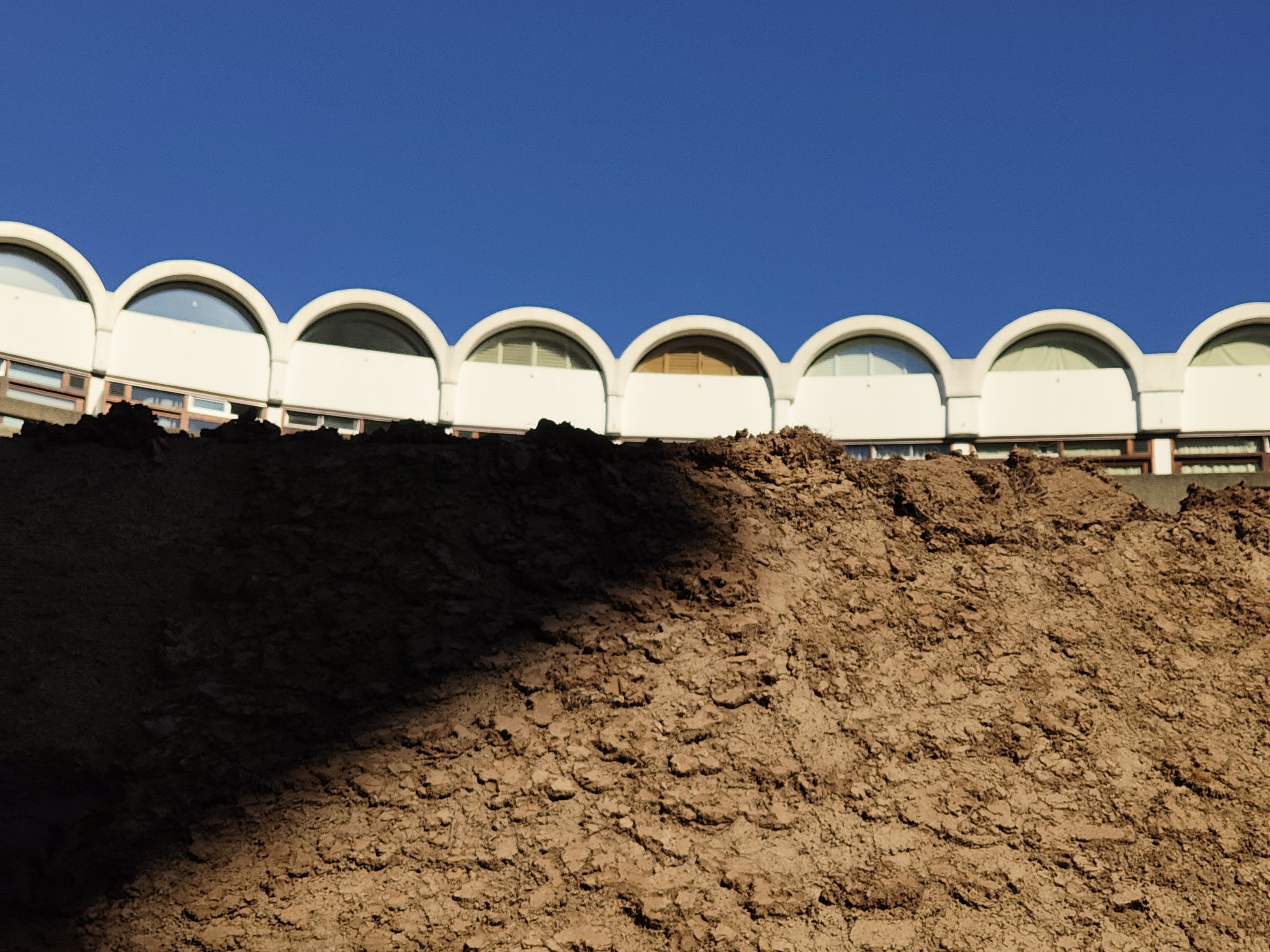
The courtyard that forms within origo intensifies the contrast with the surrounding brutalist architecture, earth and concrete intersect at every angle, the circular vision of the installation wraps us simultaneously in soil and in the materials of an industrialised world. One feels contained inside origo's courtyard, inside the Sculpture Court, inside the Barbican, inside the City of London, inside of London. The earthen materiality of origo stands in direct opposition to the concrete that embodies the Barbican's modernist ambition. This can be read as a confrontation with the Western impulse to leave the earth behind in favour of building away from it. During London's recent heatwaves, origo functioned as a refuge, which felt less like coincidence and more like argument.
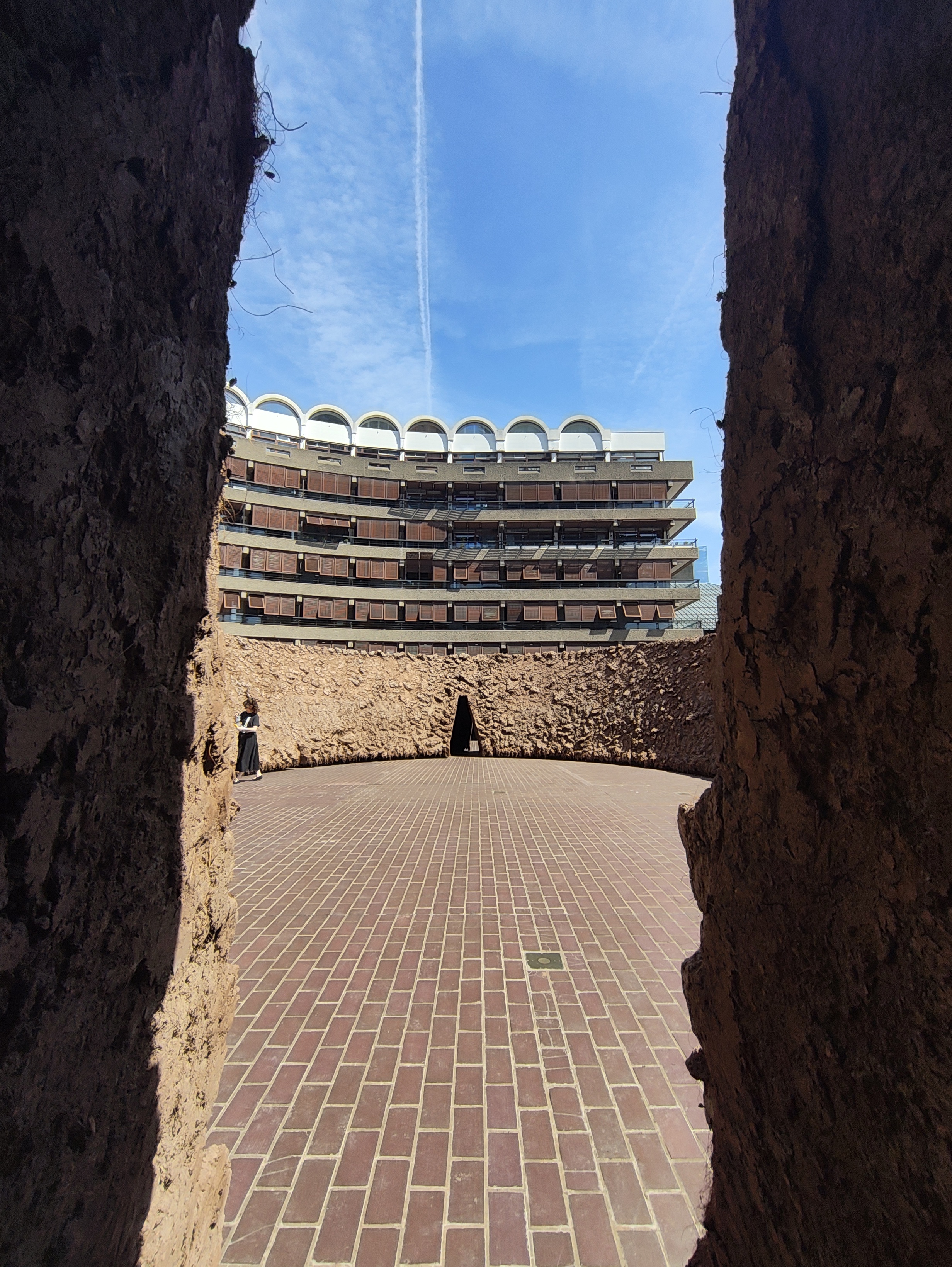
Over recent years, Morelos and her team have built soil installations in Mexico City, New York, Venice, Bukhara and Berlin, each one responding to its location and sourcing earth locally. What distinguishes origo from these earlier works is straightforward: this is the first time the installation has been made outdoors. The Barbican Sculpture Court, open to sky and weather, makes the piece change everyday according to the conditions that pass through the soil. The work changes with the day. It shelters from sun and rain alike, but responds to both. After rain it smells stronger, its colour drawing closer to the cool tones of the Barbican's concrete. In sunlight it stands out as the giant of earth it is and offers some needed shade. origo invites us to listen to the earth's language, a language that operates on a different timescale to the city around it.
How do people use it? To smell, to hide, to play. To enter and hear the silence: voices drop, footsteps slow, and people laugh nervously as they move through the dark. And how do non-humans use it? Do the foxes manage to sneak past the gates at night to have a nap? origo exceeds its initial intended audience. The earth does what it does regardless.