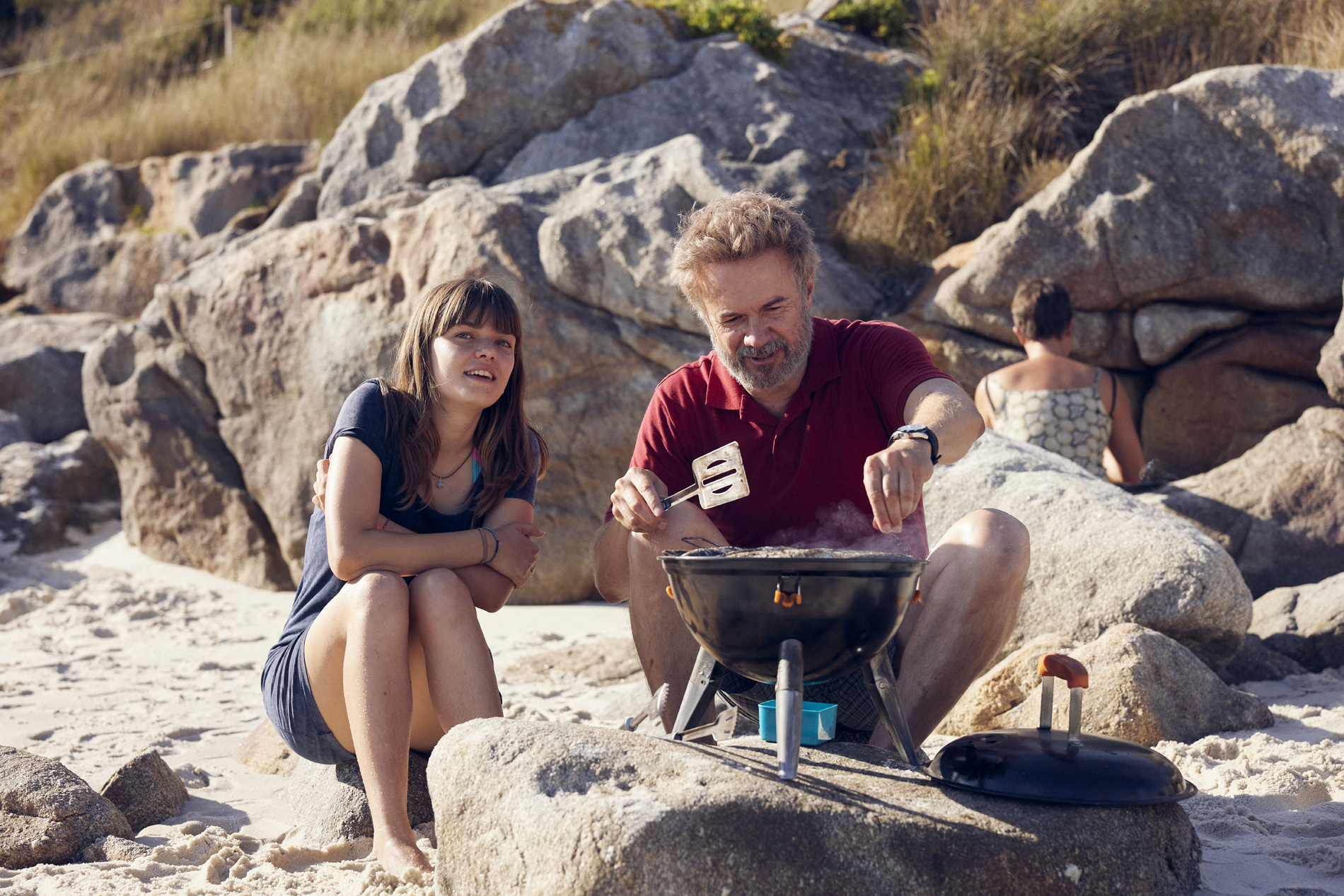
Llúcia García as Marina with Tristán Ulloa as Lois Piñeiro
“Dig into me like a sword”
Carla Simón has fascinated audiences with her subtle and moving films since her first feature, ‘Summer 1993 (2017), was screened winning many awards. With astonishing grace and poignancy, she described (as fiction) her early childhood when suddenly orphaned by the death of both her parents from AIDS, she was taken in by a relative. Her gift for filming children (and untrained actors) is truly unique and this was also evident in the second film of the group called ‘Alcarrás' which won the Golden Bear at the Berlinale. ‘Alcarrás’ reveals the suffering inflicted upon a family of peach farmers who discover they have no rights or defence to stop their beloved peach orchards being uprooted to give way to solar panels, leading to the ‘death’ of their whole way of life.
In Carla Simón's third film, ‘Romería’ (2025), the distress of being left bereft is also present, especially when faced with secrets and lies as when 18-year-old Marina ([played by Llúcia García) goes to Vigo to meet her deceased father’s wealthy family, hoping to obtain vital documents so she can obtain a scholarship to study film in Barcelona. She comes face-to- face with the happy time that her parents had spent there in Galicia and begins to understand why her presence is not what this family want around.
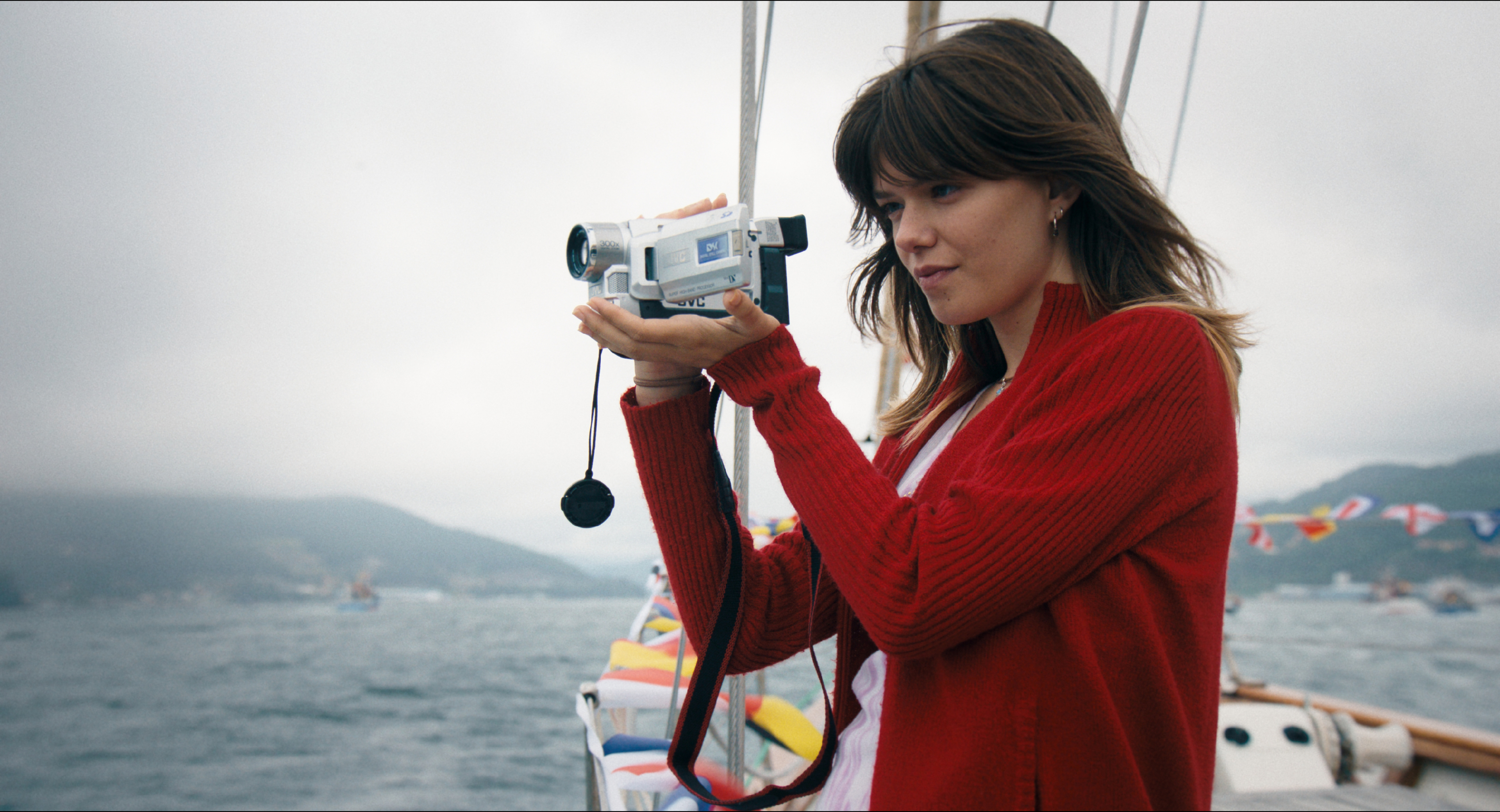
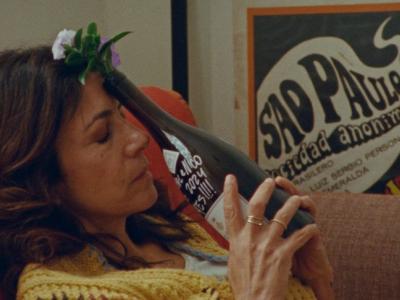
Llúcia García as Marina
Her attempt to uncover more, is confronted by a web of lies as she realizes that many of the things she had been told over the years were untrue. She is haunted by this, as it adds to the fact that she has her mother’s diary, that vividly describes her parent’s idyllic life in Vigo before they fell ill, and died of AIDS, bringing shame to the family who do not wish this information to be known. Marina may be treated with respect and a certain degree of warmth, but she is opening old wounds and not really welcome.
Marina becomes immersed in how she thinks her parent’s life in Vigo might have been. She starts trying to live those experiences for herself, even if only in her imagination, while around her a traditional religious festival of a romería is enveloping the whole town. so called, because the original pilgrimages were to the city of Rome where the Pope resides. People honour a saint or a float with the Virgin Mary, carrying it aloft as people follow in a procession, after which the community celebrates with food and drink. The Santa Compaña is a Galician myth relative to the ‘undead’ and in thos movie, it is illustrated by a group of young people in white shrouds dancing at midnight: -
“Spirits can’t die, so they remain with the living.”
Hélène Louvart’s sensitive camerawork is never obtrusive and, much like a fly on the wall, she captures intimacy and naturalness in every scene. There is a diaphanous quality to the photography of the location around Vigo and on the sailing boat, with the intense hue of the sea and the translucent blue skies. This adds to an almost esoteric atmosphere, especially when the story blends reality with magic realism in Marina's extended dream sequence,, She is transported to 1983 and relives her parent’s time there. following the guide of her mother's diary. Silent moments cry out as Marina struggles to find the answers she so needs.
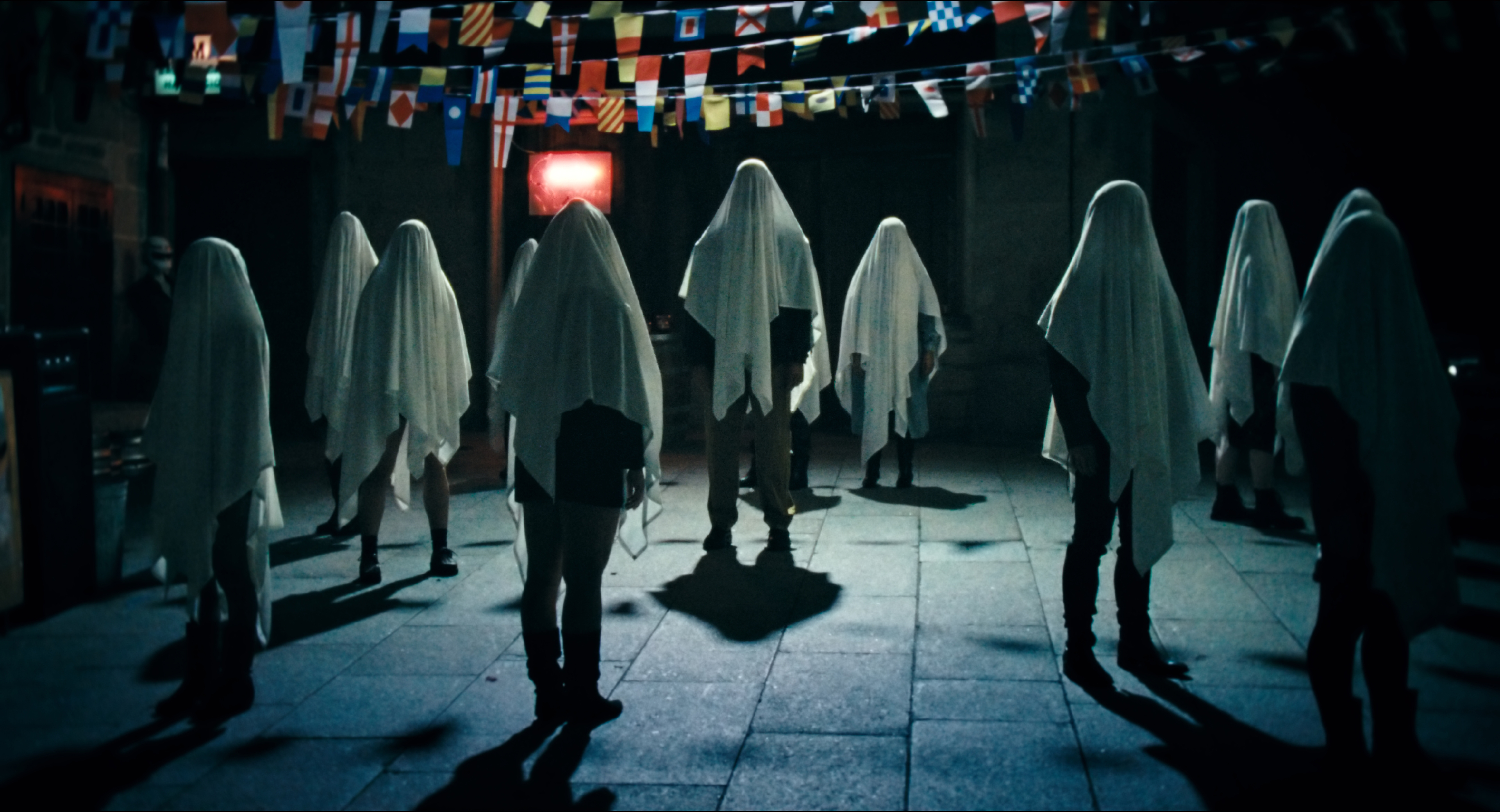
Santa Compaña dance at midnight
Interestingly, the cello music (by Ernest Pipó), that accompanies much of the film is always tense and even grating, adding a whole level of tension. Also, throughout the film, camcorder shots are hand-held in keeping with an immediacy that remains present at all times. Flash-backs are in super-8 stylized shots that, in turn, also maintain a documentary feel. The voice-over quotes from Marina’s mother’s diary are not too intrusive. Often, VO can be gimmicky, but here the flow is gentle and does not break the moment.
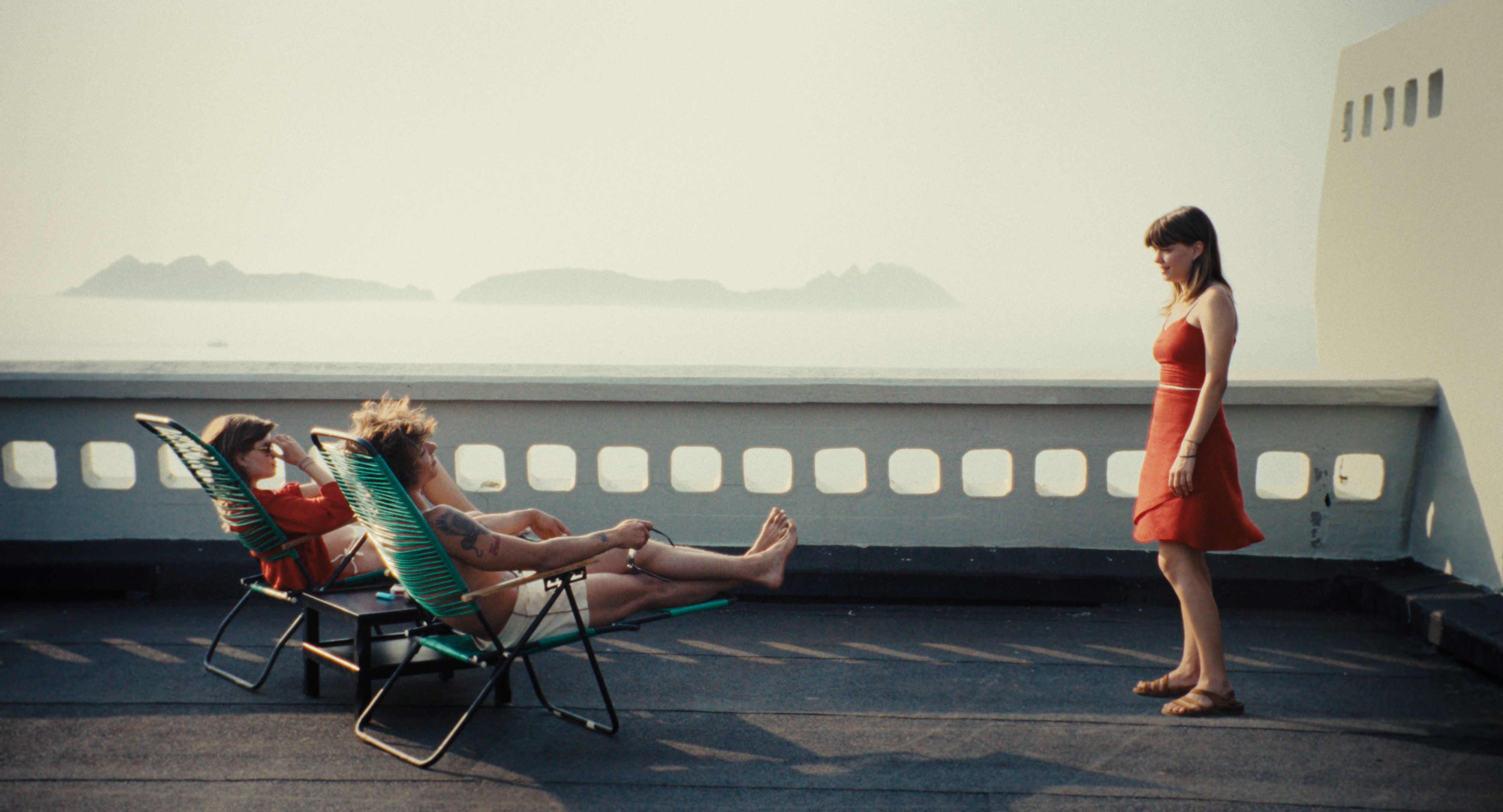
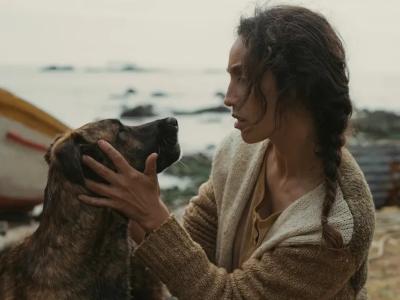
Marina in her dream, meets her parents
Llúcia García as Marina holds her own in a nuanced performance. The family dynamics are well-observed with the prejudiced rigidity of the old grandparent’s views versus the younger generations. Marina is fortunate to have her Uncle Lois (Tristán Ulloa) and his family’s help in her quest, which otherwise could easily have failed. Her cousin Nuno (Mitch Robles) and her aunt Xulia (Janet Novás) support her, which helps to keep her sane in the toxic atmosphere of a family enveloped in a web of denials and lies. Not only are they ashamed their son, FON, died from his addiction, but Marina’s mother is seen as the person responsible for having lead him astray. (Llúcia García and Mitch Robles double as Marina’s parents).
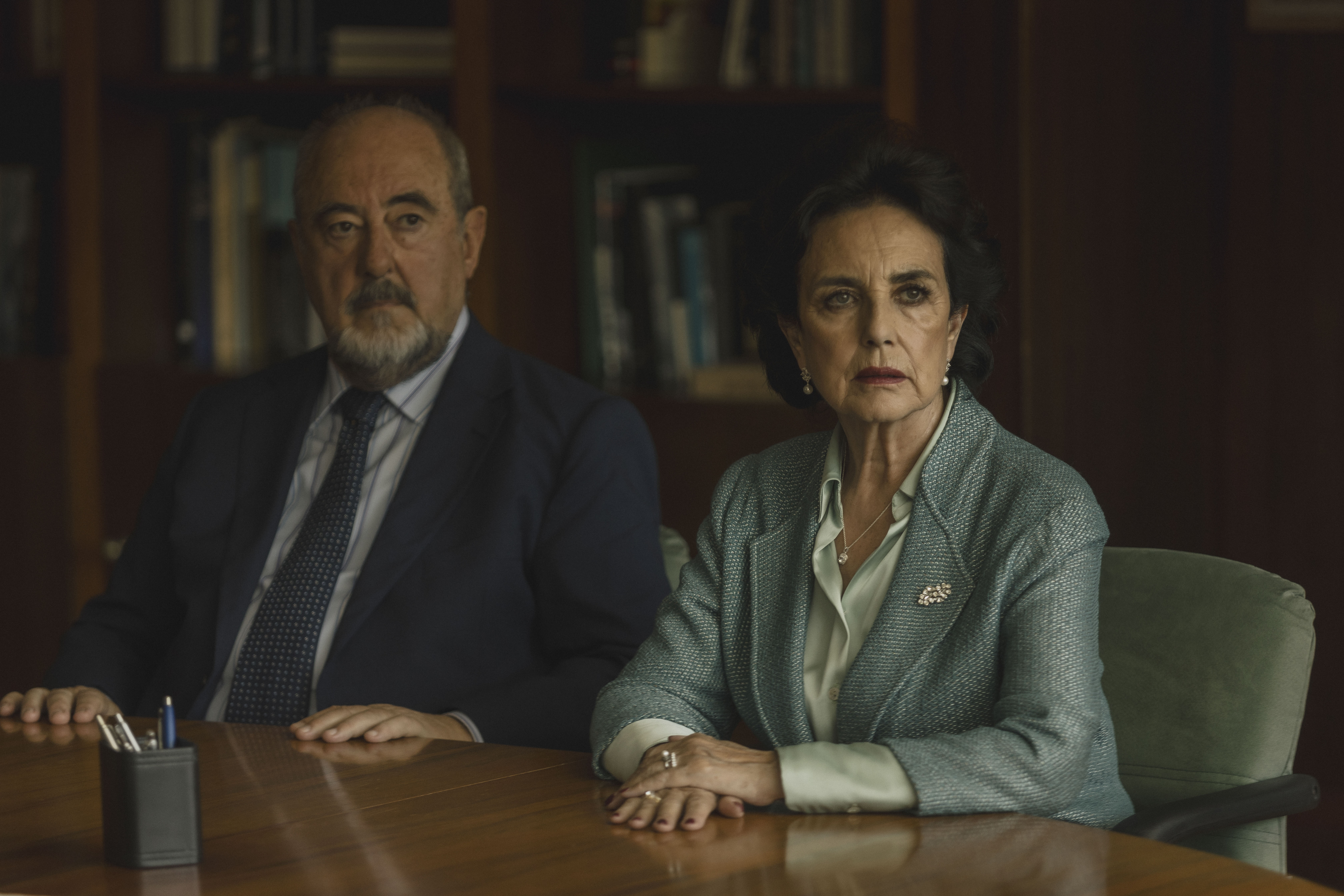
José Ángel Egido as Alfonso Piñeiro & Marina Troncoso as Rosalía de la Cruz, (Marina's grandparents).
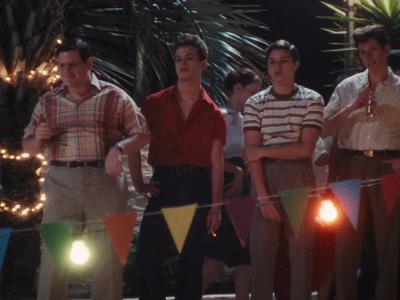
Marina’s parents died in the early 1990s, just after the transition period from the mid -seventies to the 1980s, that followed the death of the long -term dictator General Francisco Franco in Spain. With the dictatorship unexpectedly gone people were overcome with a feeling of madness and desire for experimentation due to the sudden freedoms that they could access. Sex, drugs and rock n' Roll, with no one aware how lethal this excitement was to be. The many young people who got swept up in this, are sometimes referred to as part of the ‘lost generation.’ “
“It was a massacre at the time. They all dropped like flies: accidents, overdoses and AIDS.”
Many orphans were left behind as young people were caught up in a wave of living free and taking hard drugs like heroin (and sharing needles), before the news of HIV AIDS had reached them. Until that point, it was an unknown and unnamed disease. This transition period in Spain became known as ‘La Movida’. It is a reaction that seems to repeat itself, as later, in Argentina, a similar movement took place after the fall of the Military dictatorship in 1983. There it was known as ‘El Destape’ (The Opening).
Carla Simón admits to having been strongly influenced by Barbet Shroeder's film ‘More’ (1969). It is set in Ibiza and also deals with love and addiction, though she also points to Michelangelo Antonioni’s Zabriskie Point (1970) as another important source of influence.
Simón has lived a life haunted by fragments of memory. Her mother died when she was six years old and her father died when she was only three and Carla Simón only met the rest of her family when she was 18, just like Marina in the movie. So, Simón’s last film in her trilogy, Romería, is really about memory and loss, and all the things that can never fully be recovered by those left behind, who are doomed to only speculate, imagine and dream.
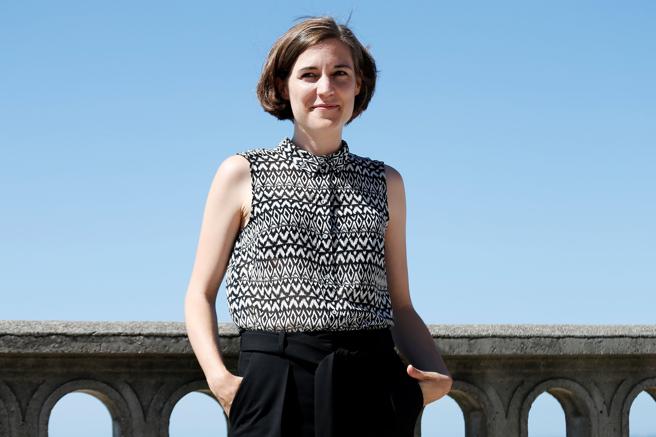
Carla Simón
‘Romería’ has won many prizes. It was awarded six Goya nominations in 2026, won the Horizon d’Or at the 2025 Festival of Spanish Film in Marseille, the Jules Verne prize for Best Film at the 2026 Film Festival in Nantes, and Llúcia García was awarded Best Actor for her role in the Gaudí Awards.
ROMERÍA (2025)
Written & directed by Carla Simon at the Curzon Cinemas UK.
Diary& Letters: written by Neus Pipó Simón / Producer: Maria Zamora & Carla Simón/ co-produced by Olimpia Pont Cháfer and Ángels Masclans/ DOP: Hélène Louvart AFC / Editors: Sergio Jiménez and Ana Pfaff/ Composer; Ernest Pipó / Direct sound: Eva Valiño. Roi Álvarez Ramos & Pepe Del Pozo / Mixer and sound supervisor: Alejandro Castillo
CAST: Llúcia García: Marina Pi / Mitch Robles: Nuno & Alfonso (Fon) Piñeiro de la Cruz (Marina’s father) /Tristán Ulloa: Lois Piñeiro / Celine Tyll: Denise / Miryam Gallego: Olalla Piñeiro / Janet Gracia: Iago Piñeiro / Janet Novás: Xulia / José Ángel Egido: Alfonso Piñeiro (grandfather of Marina) / Marina Troncoso: Rosalía de la Cruz (grandmpther of Marina) / Leٕón Romagosa: Basilio / Hans Romagosa: Eugene / Sara Casanovas: Virxinia.
In Spanish, Catalan, Gallego and French
For more information on Carla Simón see our reviews: -
Summer 1993 (2017) can be viewed at: https://www.latinolife.co.uk/articles/carla-simon-new-female-face-spanish-film-making
Alcarrás (2022): https://www.latinolife.co.uk/articles/alcarras-2022-catalan-writer-director-carla-simon