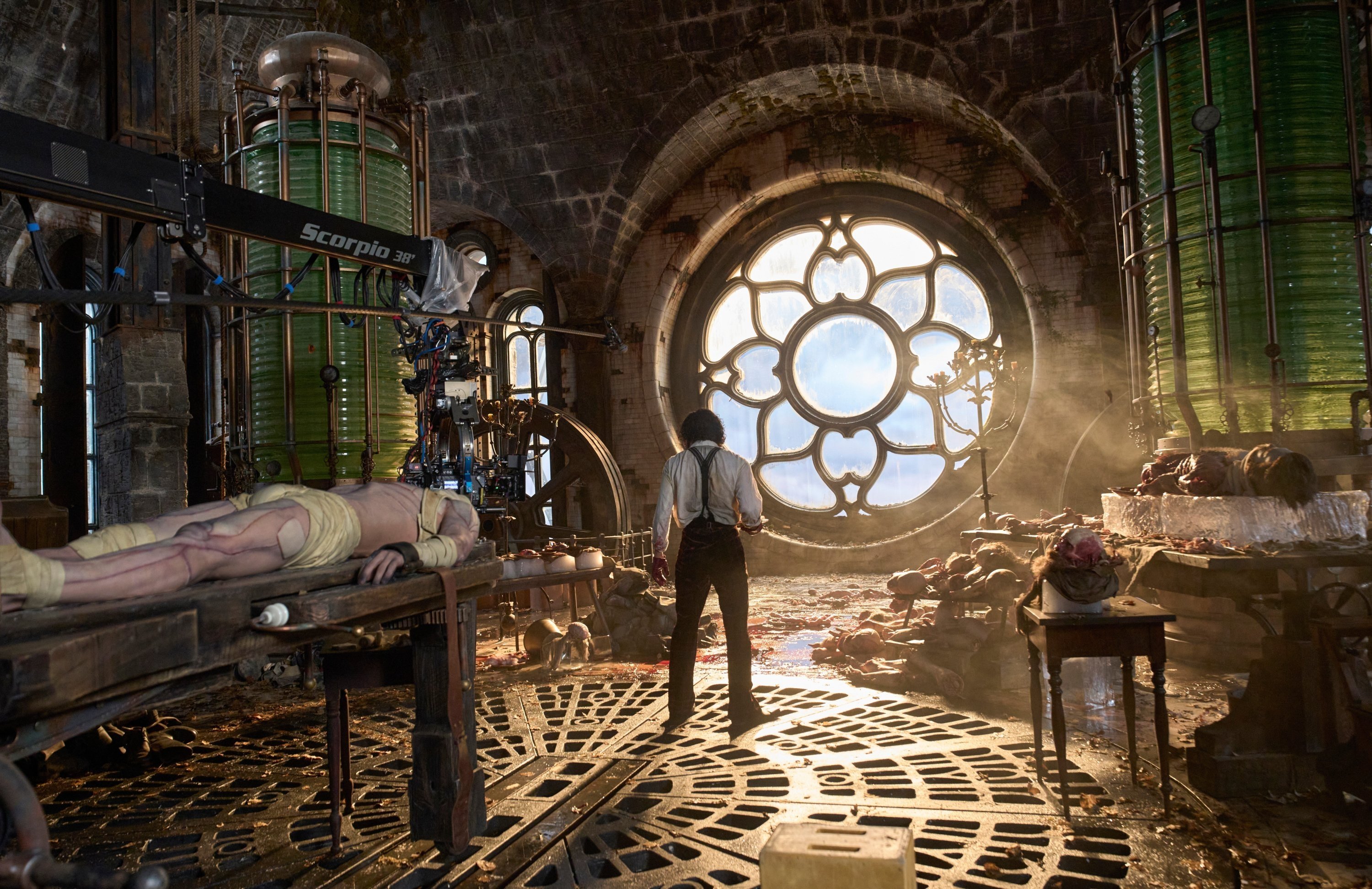
Oscar Isaacs as Frankenstein in his laboratory
“If we are to behave like Gods… we must, at the very least, deliver miracles”
First of all, we have the extraordinary story, ‘Frankenstein or the modern Prometheus’ (1816). created by the 18-year-old Mary Shelley when challenged to think up a ghost story by Lord Byron. Staying with poet husband Percy Bysshe Shelley, in Gernsheim, Germany, only a few kilometres from Frankenstein’s’ Castle, Mary was fascinated to learn that, a century earlier, an alchemist had lived there, engaging in strange experiments supposedly including galvanism and the occult. With a Gothic and romantic style at its most potent, Mary synthesized this kernel, to write about a scientist who managed to make a dead body come to life, only to later be horrified by what he had created.
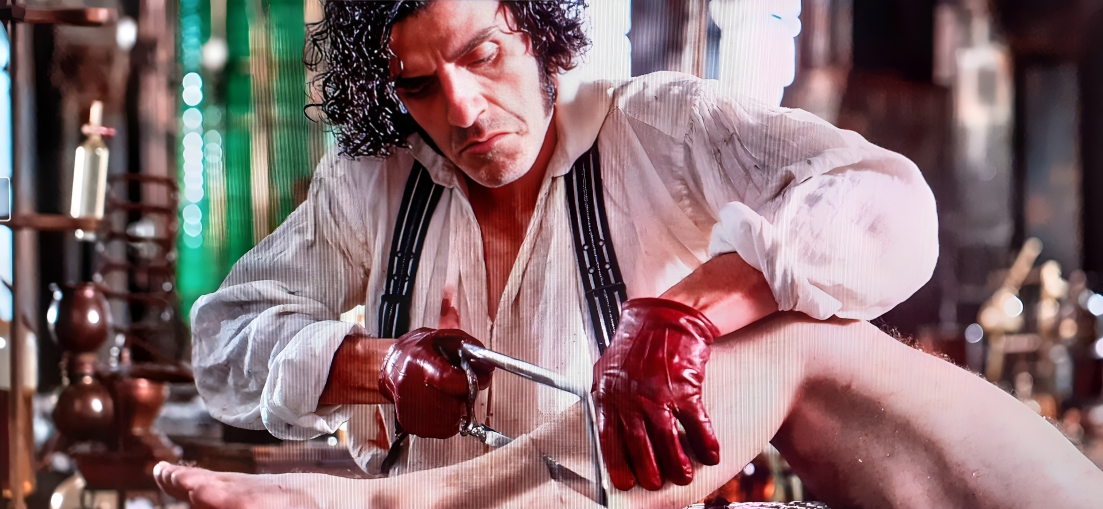
Oscar Isaacs
This single- minded obsessive scientist, Victor Frankenstein (played in the film by Oscar Isaacs), resurrects a creature built up of body parts, which in the end, leads to his own demise and the eternal suffering for his creation. It touches of who should or not play God and how far should we consider the consequences. Here they are tragic, weighted by the overwhelmingly sad life to which he has condemned his creature.
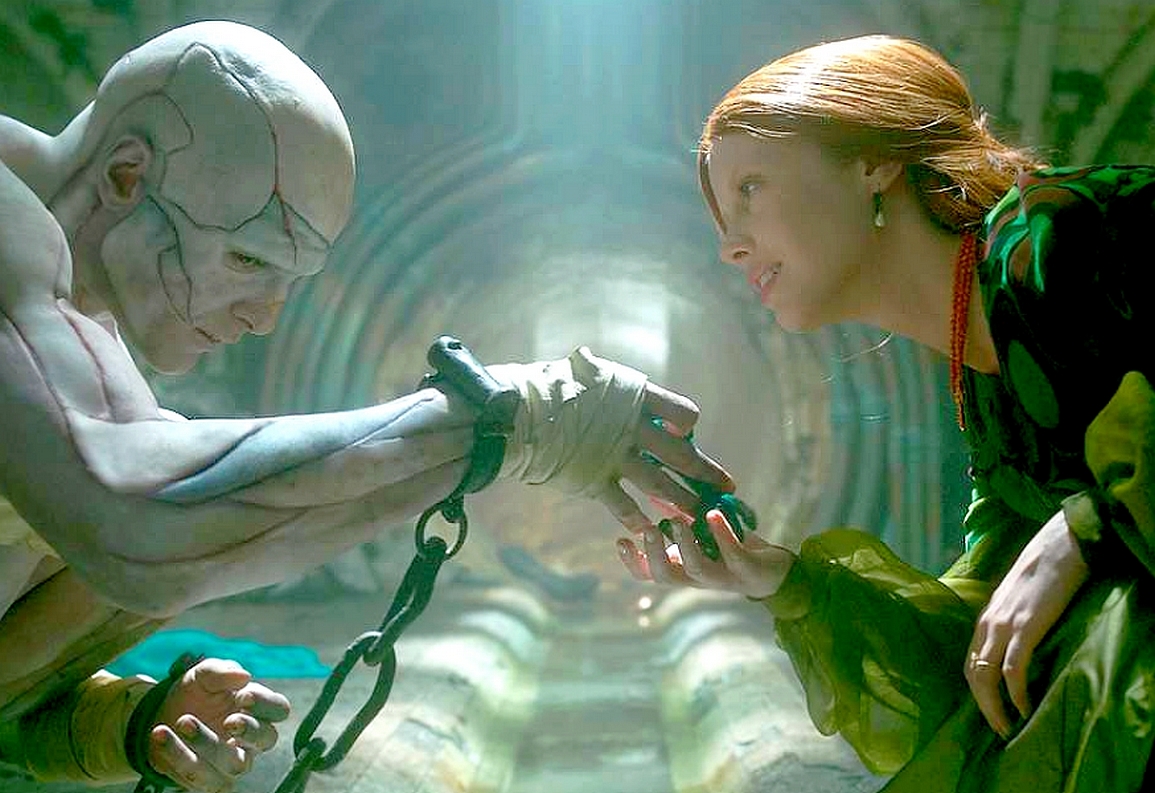
Jacob Elordi as the creature with Mia Goth as Elizabeth.
This epic story could almost have been written by Del Toro himself being a theme so close to his heart. His first ever film Cronos (1992), hugely original, mixes mythology and religious references with horror. The story starts in medieval times, 1536, when an alchemist in Veracruz develops a mechanism for eternal life and hides it in the hollow base of an archangel statue. Centuries later it is rediscovered with terrible consequences. His second film, The Devil’s Backbone (2001) veers more towards the supernatural with a story with vengeful ghosts, who help the living dispose of a child’s murderer during the final days of the Spanish Civil War.
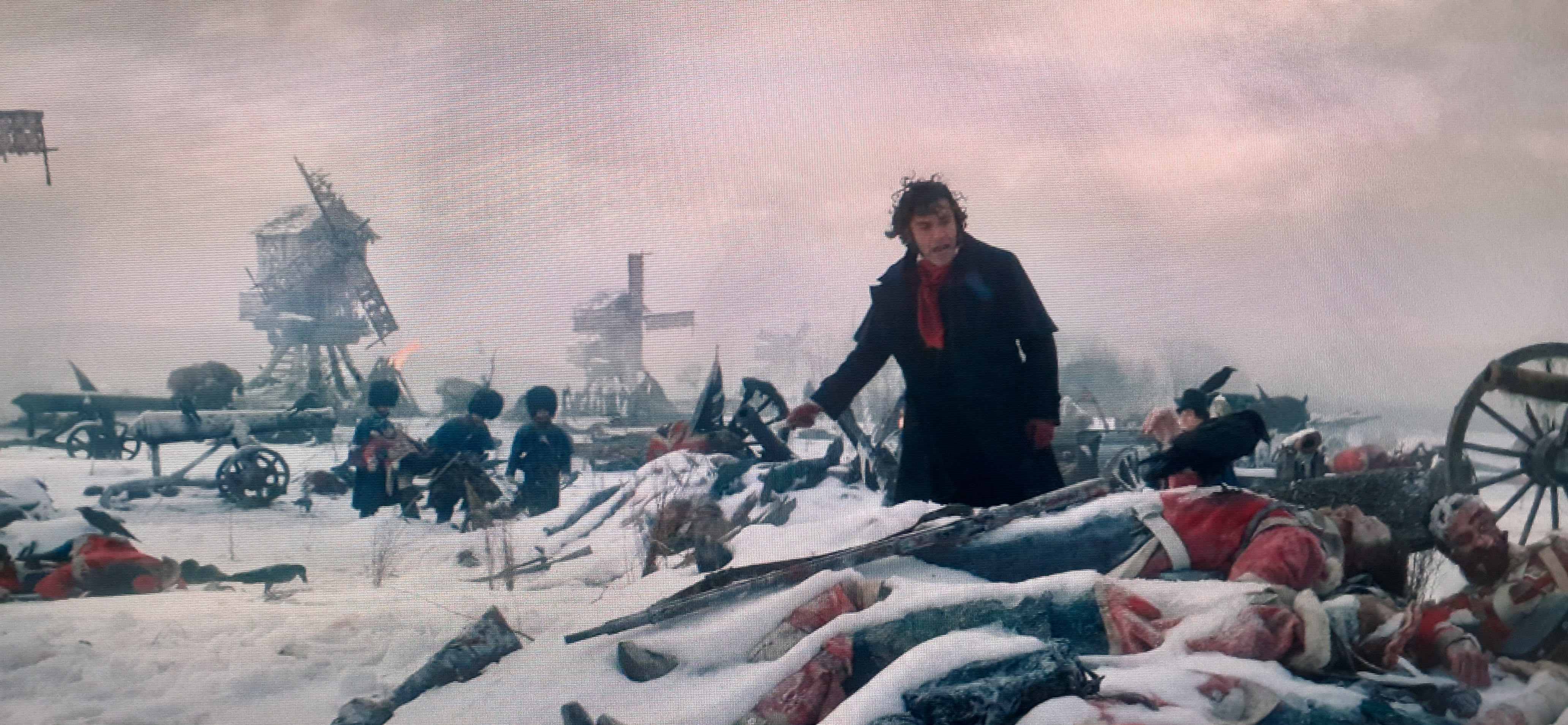
Guillermo Del Toro’s subsequent films include the magical Pan’s Labyrinth (2006) with its dream world revealing a subtle critique of Franco’s fascism, and The Shape of Water (2017) where we are overcome with empathy for the captured amphibian creature, played by Dough Jones. In Hellboy (2004) starring the wonderful Ron Perlman, Del Toro was able to display his huge talent for humour as well as fantasy, so you would have thought there was nowhere else to go. Wrong!
Now, with his new interpretation Mary Shelley's novel, Del Toro transports us into an intense world of horror with astonishing imagery and art production superbly created by award-winning Tamara Deverell, who turned out to be the vital ingredient in a long-time working partnership that has proven to be hugely successful. To date ‘Frankenstein’ has attracted 9 Oscar nominations, been awarded 55 wins and no fewer than 258 nominations in festivals around the globe.
At times, Oscar Isaacs as Frankenstein comes across as hysterical and petulant in the melodrama, rather than passionate, which is a shame. As a child, his character has had to contend with his sadistic father Leopold (Charles Dance) who undermines him at every turn, even striking him across the face with his cane if he does not learn quickly enough. The humiliation and rage that this engenders leads Victor down darker roads that anyone could have fathomer in his distorted attempt to be loved.
When, in the final chapter, the creature starts to tell the story from his point of view, we touch base and the emotional heart of the film takes off, evoking a profound empathy for him. Some of these scenes take place in the frozen Arctic where we are thrust deep into dramatic landscapes reminiscent of James Frank Hurley’s 1915 photographs of the doomed ‘Endurance’ stuck in the ice, while the monster remains invincible and painfully human.
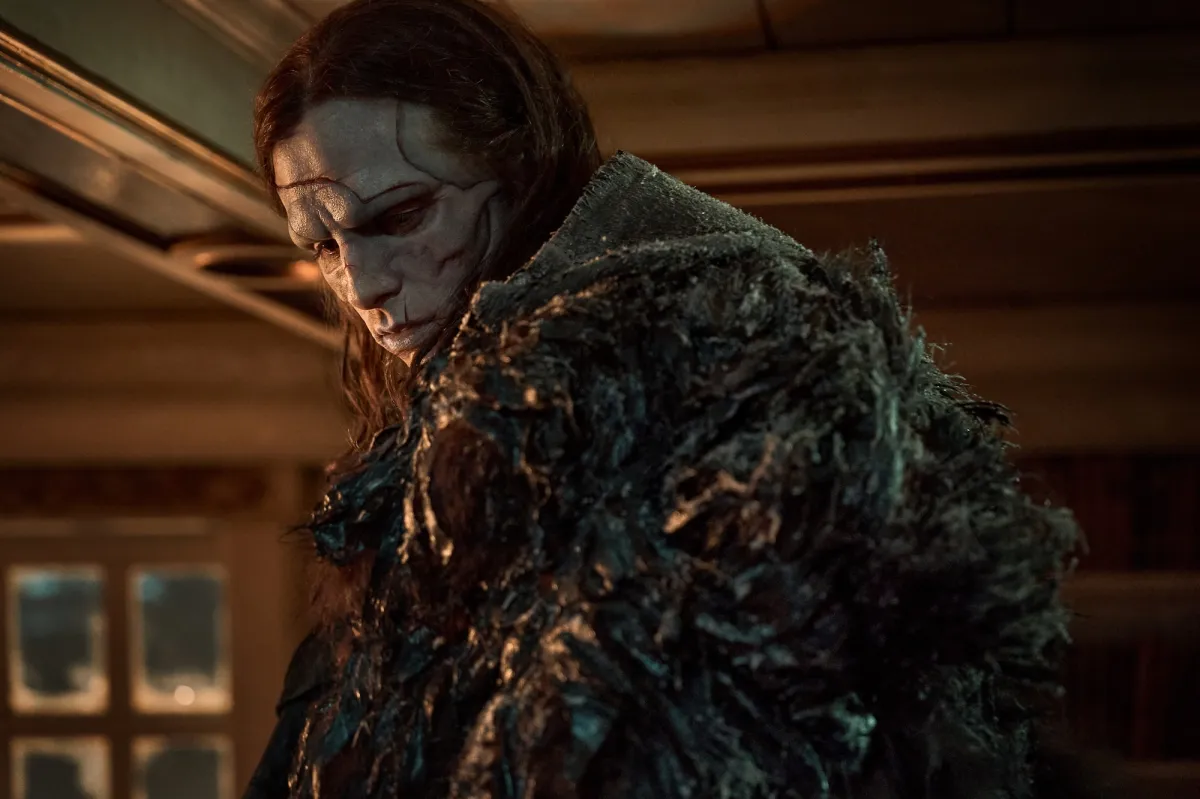
Jacob Elordi
Del Toro, Deverell and crew scouted all over Europe for locations before deciding to shoot some scenes in the UK, with many sets being built at Pinewood Studios in Toronto. Bernie Wrighton’s Marvel style edition of Shelley’s book also proved useful with his dramatic illustrations. Also, we see certain circular motifs that recur in Del Toro’s works, such as the huge window in the laboratory tower (with references to Notre Dame) and the circular head of a Medusa staring down from a wall. With Del Toro, nothing is left to chance. He worked feverishly in notebooks that almost resemble those of Da Vinci, with sketches of the creature and the iconic archangel’s cross as inspiration for the set designers and art directors. Some effects were created with models, and others with full-size sets, as well as CGI, but always with Del Toro’s distinctive and meticulous attention to detail. Tamara Deverell has described Del Toro as the dreamer and she the one who makes it real.
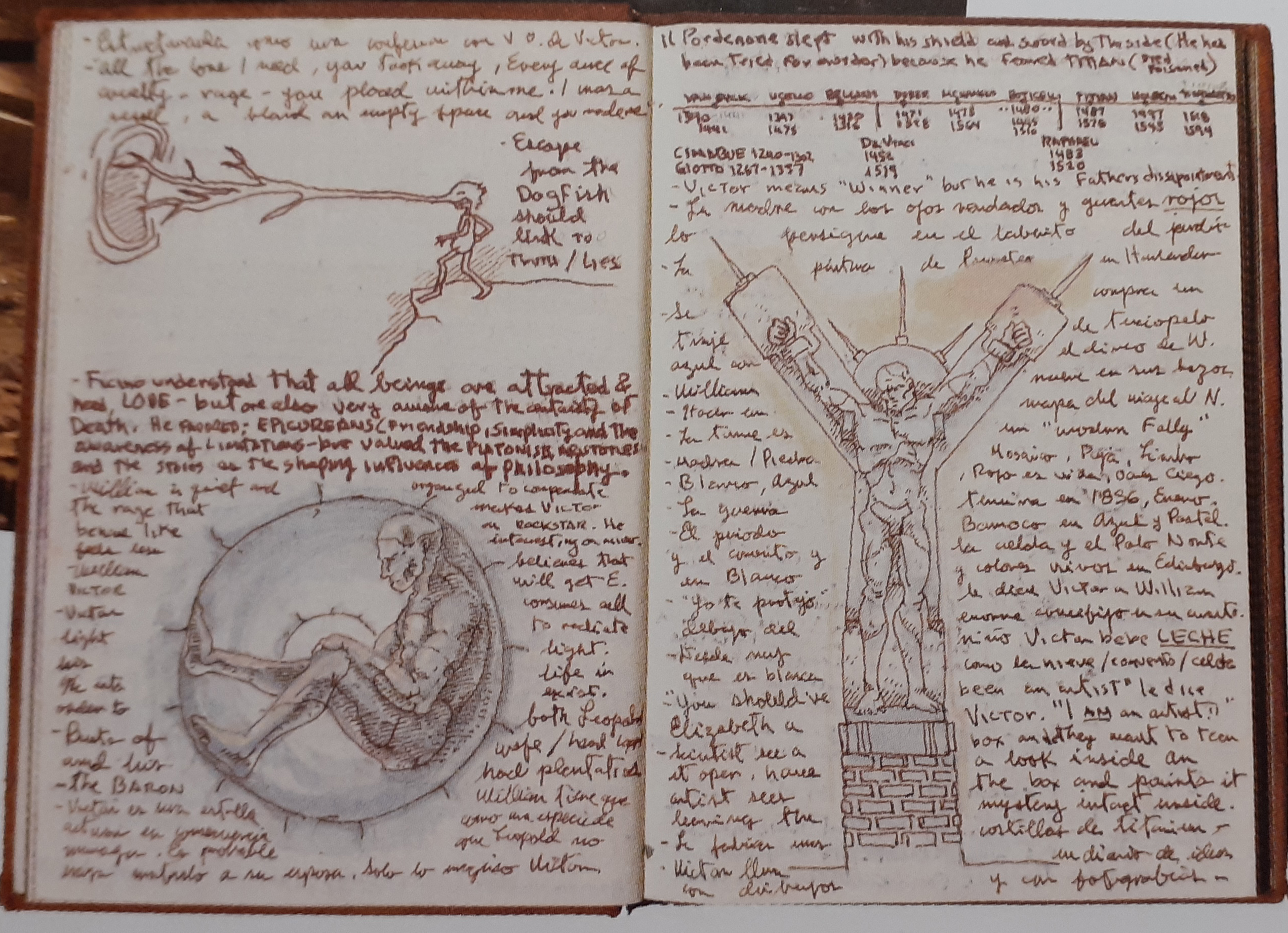
Del Toro's notebooks with sketches
When he was a child, Del Toro’s mother dabbled in tarot and the occult, awakening his fascination with the subject. After his father won a fortune on the lottery, he saw less of his parents and in the end, one of his greatest influences ended up being his great aunt, whom he referred to as Abuela. She imprinted some aspects of religious symbolism on him with her Roman catholic teachings. She even tried (fortunately in vain) to exorcise his fascination with monsters with holy water which led to his developing a bond of guilt and a notion of damnation. But, at a very personal level, Del Toro’s imagination was peopled by his vivid dreams of paranormal creatures. Apparently, his first Gothic filmic experience was the 1939 melodrama Wuthering Heights.
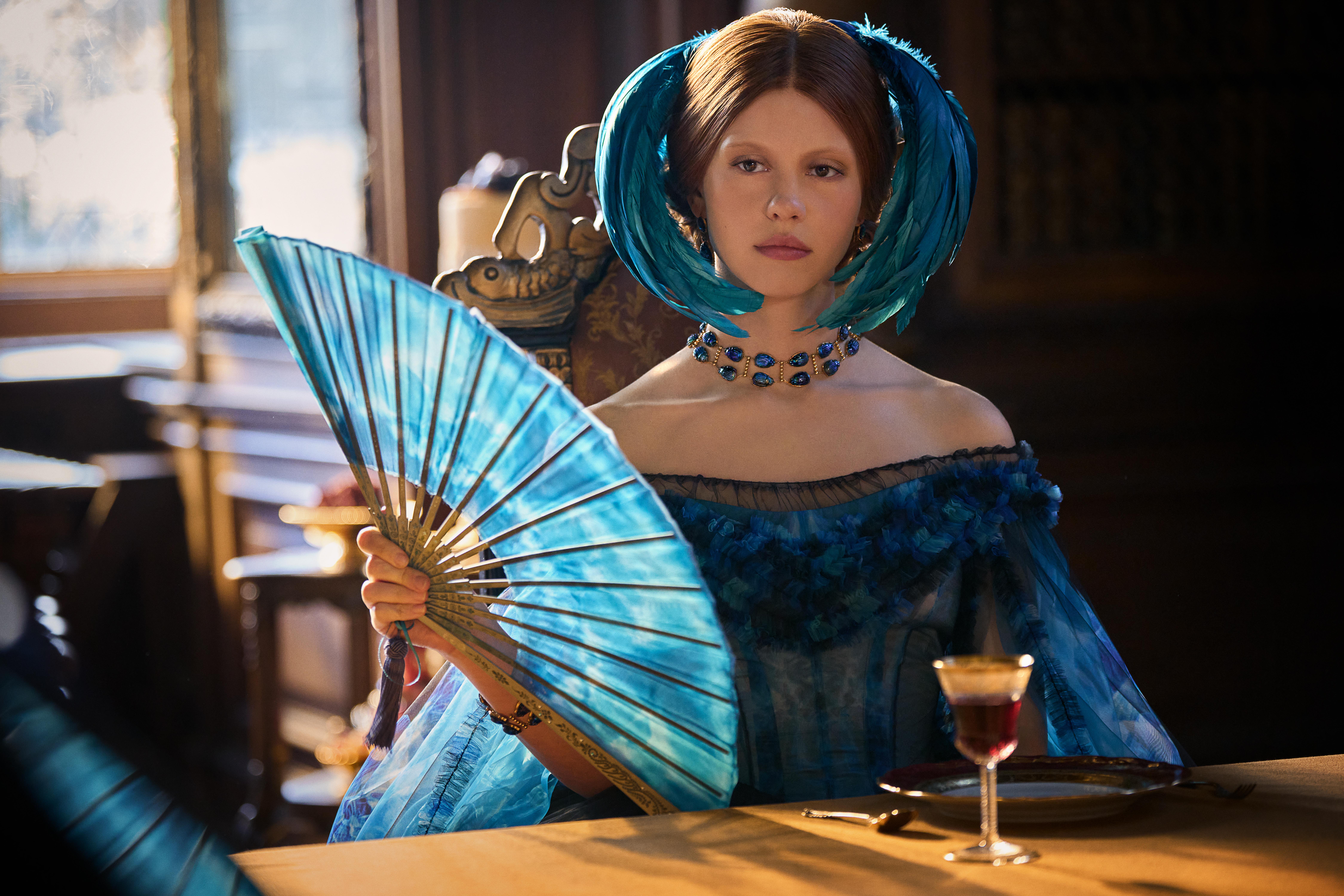
Mia Goth
Behind Victor Frankenstein’s super-human obsession with success, is the agony of love, and the futile yearning for his cruel father’s love. It led to the destruction that overcame all who went near him including his own family and of course, his creature. In the end, it destroys he is destroyed by his obsession as well. In this story no one’s love is properly requited, creating a deep sense of isolation. Victor loves Elizabeth, his own brother’s fiancé, but she can see right through him despite a superficial attraction; then the creature begs, in vain, for Frankenstein to create a female companion for him. The only ones who ends up properly understanding the pain of this monster are a blind man and a dying woman.
Jacob Elordi excels as the monster, eliciting our deepest compassion, and Mia Goth, playing Claire and Elizabeth Frankenstein, also steals our heart. The whole mise-en-scene is epic in its conception, with outstanding sets costumes and special FX at every level.
The unanswered question remains: who is the real monster?
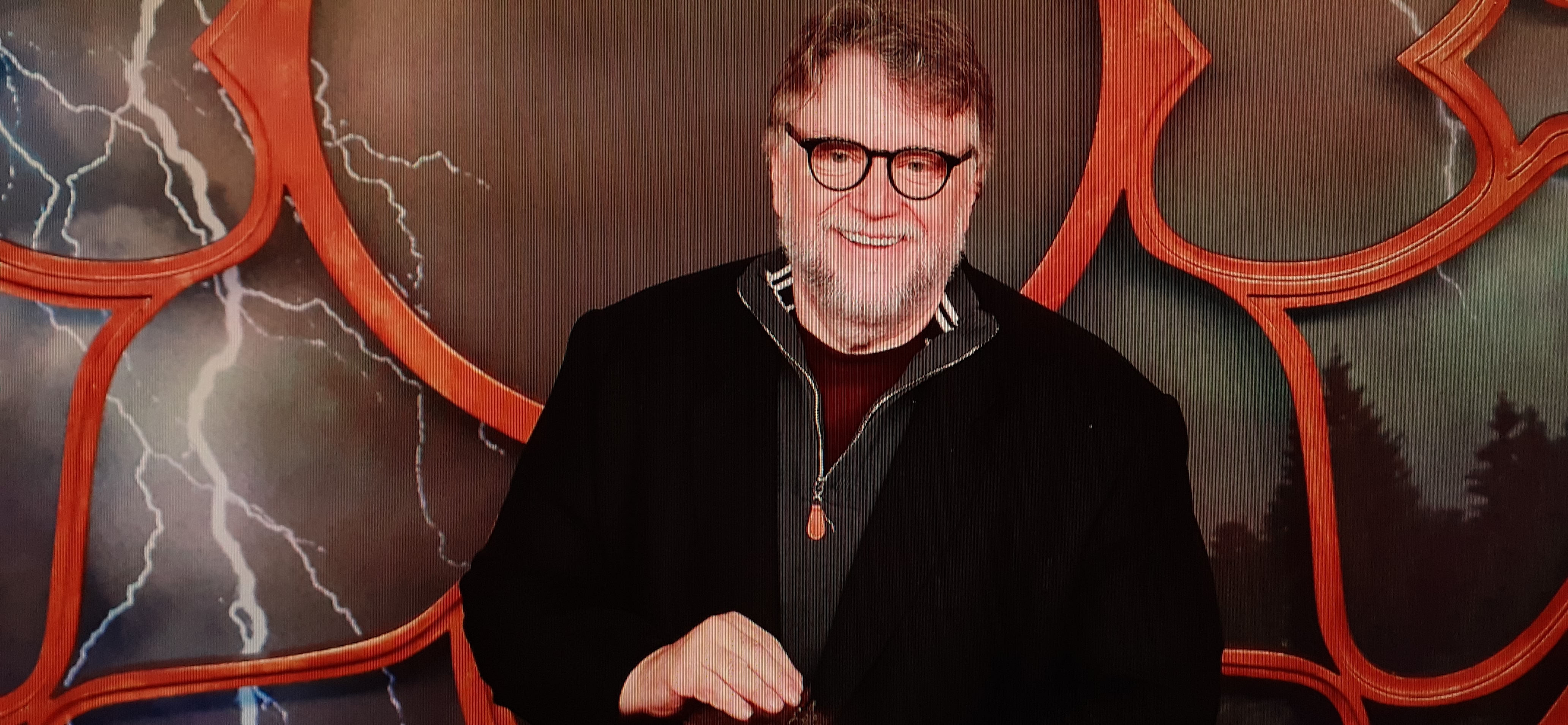
Guillermo del Toro
Guillermo Del Toro has followed a similar journey to Frankenstein, but instead of a monster, he created a stunning film that will also defy death by continuing to be appreciated, probably long after we are all gone.
‘FRANKENSTEIN' (2025) is on NETFLIX
Writer/ Director Guillermo Del Toro/ Book by Mary Shelley /
Producers: J. Miles Date, Guillermo del Toro and Scott Stuber/ Composer Alexandre Desplat / DOP: San Laustsen / Editor Evan Schiff/ Production Design: Tamara Deverell / Set Decorator Shane Vieau / Prosthetic Make -Up Artist Alexandra Anger/ Key Prosthetics Supervisor: Megan Many / Sound Designer: Paul German / Visual FX Production Manager: Brittany Amos / Costume: Kate Hawley /
Victor: Oscar Isaacs / William his brother: Felix Kammerer / Young Victor: Christian Convery / Leopold Frankenstein: Charles Dance /Herr Heinrich Harlander: Christopher Waltz / Elizabeth and Claire; Mia Goth / The Creature: Jacob Elordi / Lars Mikkelsen: Captain Anderson / David Bradley: Blind Man/